

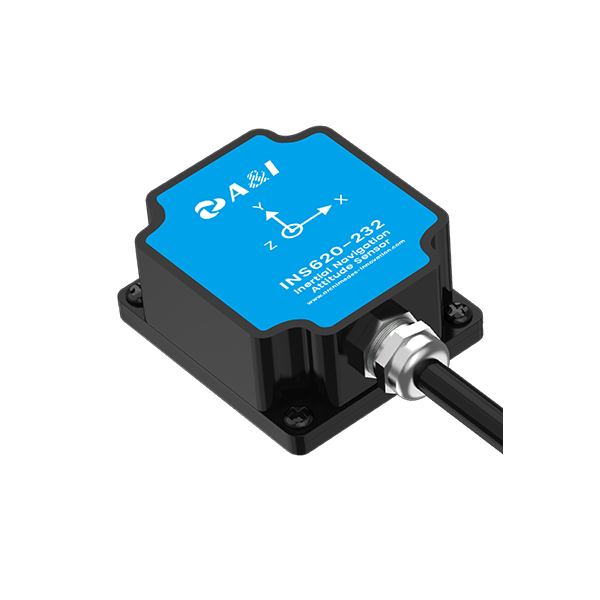
User-first tightrope: why attitude accuracy actually matters
Engineers and integrators need attitude data that won’t bail out mid-maneuver — that’s the whole point. For vehicle-level systems the jump from single-sensor guesses to reliable orientation impacts braking, lane keep, and automated steering. That’s where a robust vehicle domain controller synergy with dual-antenna heading and pitch routines pays off: cleaner heading, quicker convergence, and fewer surprises when the road gets ugly. Add in the realities of ISO 26262-informed design processes used across Detroit OEM projects and you get a practical baseline for safety and development workflows.
How dual-antenna setups actually improve dynamic attitude
Two antennas create a fixed baseline, and that baseline fixes heading ambiguity much faster than single-antenna GNSS approaches. With phase-differencing and carrier-phase measurements you shrink heading error and get pitch stability when the vehicle noses over hills or crests. Combine that with an IMU and a Kalman filter for sensor fusion and you’ve got millidegree-level smoothing that survives short GNSS outages and multipath-prone urban canyons. The takeaway: baseline geometry plus carrier-phase RTK helps the algorithm stop guessing and start knowing.
Practical integration: working with ECUs and networks
Integration isn’t mystical—it’s nuts-and-bolts. Feed attitude outputs to the automobile electronic control module or downstream ECUs over CAN bus or automotive Ethernet, map latency budgets, and align coordinate frames. Calibration’s a few hours of grunt work but saves months of bug chases later—mounting errors, sensor misalignment, or timing slip will show up as consistent bias if ignored. Also watch processor load: sensor fusion algorithms like extended Kalman filters need predictable CPU time, so budget that into your domain controller tasks.
Common mistakes teams keep making — and how to stop ’em
People under-estimate mechanical realities. Antenna placement too close to metal, poor cable routing, and ignoring thermal expansion all introduce errors. Over-trusting GNSS fixes during multipath conditions is another classic; urban canyons will betray naive setups. Latency mismatch between IMU and GNSS streams causes filter divergence — sync your timestamps. And don’t forget firmware version control across modules — inconsistent calibration routines across releases create intermittent faults. Small oversight, big headache — save time by enforcing a calibration checklist early on.
Golden rules: 3 metrics to pick the right attitude solution
1) Heading convergence time: measure how long the system needs to reach operational accuracy after cold start or a GNSS outage — shorter is better, especially for dynamic driving. 2) End-to-end latency: from IMU/GNSS capture to ECU actuation, keep latency predictable and below your control loop budget. 3) Robustness under multipath and vibration: validate with urban canyon drives and shaker tests; if heading drifts under real-world vibration, it fails. These three metrics give you concrete pass/fail gates during integration and avoid wishful thinking.
Closing thoughts — practical value and who benefits
Implementing dual-antenna attitude with disciplined sensor fusion reduces edge-case failures and shortens integration cycles for OEMs and Tier suppliers alike. Teams get fewer field fixes, testers get faster sign-off, and drivers — well, they just expect the car to behave. The realistic design and validation approach favored by firms in Detroit and other established automotive hubs proves out the model every time. Archimedes Innovation naturally sits at that juncture—helping align sensor geometry, calibration practice, and controller interfaces so the math actually meets the road. —