

Introduction: A Busy Car Park, a Rainy Morning, and a Hard Question
Ever rocked up to a packed car park, rain sideways, two EVs idling, and one charger blinking red? Been there, mate. Commercial EV charging stations can turn a calm morning into a queue quick smart when demand spikes or a unit drops off. Last year, sites like this in Australasia saw utilisation swing by over 40% across peak hours, yet downtime still ate into ROI and customer trust. So here’s the rub: if the car park traffic is steady and the chargers are “smart,” why do drivers still wait, and operators still cop big bills—aye?

Picture this: the café wants you gone in 20 minutes; the charger says 50. Operators juggle tariffs, grid limits, and maintenance windows. Users just want a fair go. The numbers look fine in a slide deck, but in a southerly, with school drop-off and tradies in utes, the gap between plan and practice widens. What’s the real blocker—technology limits, site design, or the way systems talk to each other (or don’t)? Let’s unpack it and tee up what actually lifts throughput and keeps costs sweet as—then we’ll move into the fix.
Hidden Pain Points That Trip Up Smart Rollouts
Where do good plans stall?
Many teams chase features before fixing fundamentals, and that is where commercial EV charging solutions can either shine or stumble. First pain point: data blind spots. If your network relies on delayed cloud polling, your load management reacts too late to spikes. Edge computing nodes help by making local calls on throttling and session prioritisation in milliseconds. Second: power converters and breakers sized for “average” use, not the harsh peak. When two DC fast chargers ramp at once, weak feeder protection trips, and you’re stuck rebooting hardware—funny how that works, right?
There’s also the human layer. Users hate mystery pricing and stalled sessions. Operators hate chargebacks and ghost faults. Look, it’s simpler than you think: transparent tariffs, live capacity indicators, and clear error codes reduce churn. But the stack must back it up. OCPP interoperability needs proper certification, not just a checkbox. Robust fault diagnostics should isolate whether it’s the EV, the cable, or the charger’s RFID reader. Add demand response hooks to trim demand charges, and you stop paying for the worst 15 minutes of the month. Different rhythm than the story we opened with, sure—but this is the nuts and bolts that keep sessions flowing.

Looking Ahead: Principles That Make the Next Wave Work
What’s Next
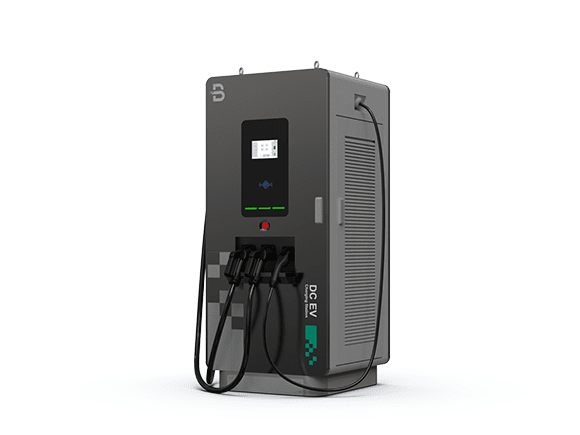
The next lift comes from three principles that work together—local brains, flexible power, and open ops. Start local: intelligent schedulers on-site test-phase sessions and nudge AC and DC ports based on real-time feeder headroom. That means your system does peak shaving before the meter spins. Then the power layer: modular rectifiers and swappable power modules cut mean time to repair, while bi-directional inverters open a path to vehicle-to-grid when policy allows. Finally, open ops: OCPP 2.0.1 with proper firmware governance, plus API hooks for parking systems, makes “one source of truth” real. When you deploy EV charging stations for commercial parking lots with these principles, you get fewer surprises, faster turnarounds, and cleaner reporting.
Comparatively, sites that keep a cloud-only orchestrator and static setpoints look tidy in testing but stumble at the rush. The forward-looking sites use local controllers, dynamic tariffs, and grid signals to shift kW without drama—funny how that lines up with happier drivers and lower bills. Quick case: one mixed-use car park split four DC ports across two cabinets with shared power. With adaptive queuing and session caps for fleet cards, throughput rose 23%, while demand charges fell after enabling demand response. The lesson isn’t “buy the fanciest box.” It’s “engineer for change.”
To wrap with practical advice, here are three metrics to compare before you choose: 1) Response time to grid events under load, measured at the controller, not the cloud; 2) Mean time to recovery for common faults (cable, reader, module) and parts availability; 3) Real-world utilisation per kW of connected capacity, including peak-window performance, not just daily averages. Nail those, and the rest tends to fall in line. Keep the tone steady, keep the people front and centre, and keep tuning—because the best sites evolve without fuss. For a grounded take on where the market is heading, see EVB.