

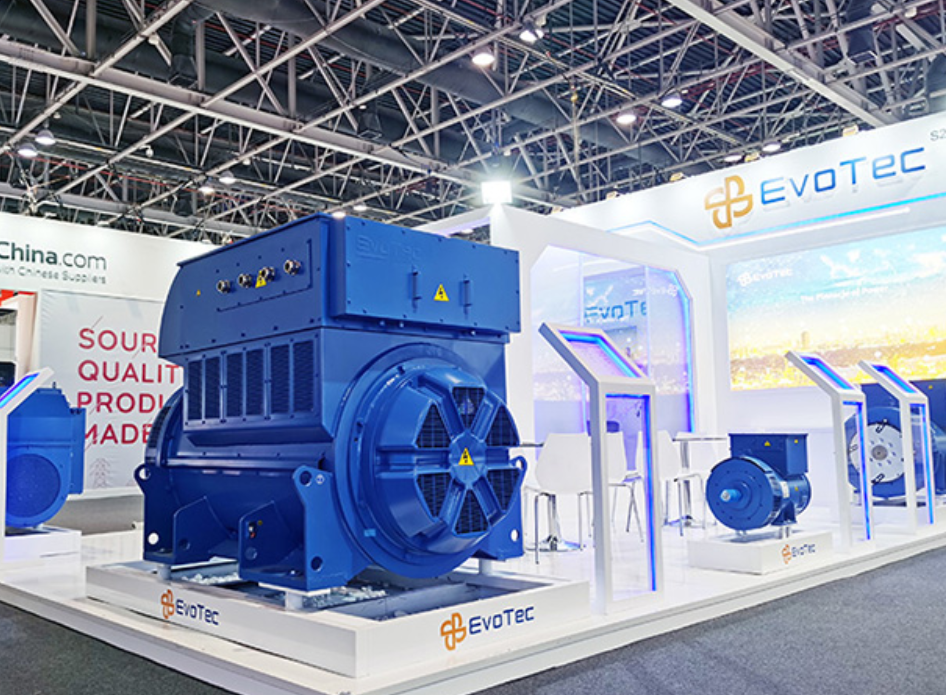
When you rely on heavy alternators for work — on a tugboat moored at Port of Alexandria or powering a remote site — the priorities are simple: steady voltage, predictable maintenance, and parts that survive sea spray. Start by matching capacity to duty and test under realistic load; for many marine and industrial setups that means checking performance with your 480V generator under a controlled load bank test so you don’t discover limits at the worst moment. This user-first approach keeps downtime low and costs predictable, and it’s exactly what I learned maintaining a 20kva alternator on a small coastal workboat — those lessons still guide my checklist.
Rule 1 — Match the alternator to the actual load profile
Designing around peak numbers is tempting, but the real win is load-matching. Know the continuous kW demand and short-term peaks, and pick voltage regulation and excitation system settings accordingly. A generator sized only for peak can suffer from thermal cycling; an undersized unit sees overloads and accelerated wear. Use a load bank test to simulate real usage and tune the AVR so voltage drift stays within acceptable limits during transient loads.
Rule 2 — Guard against heat and moisture
Heat and humidity are the two killers of insulation resistance and bearing life. Keep alternators ventilated, watch cooling ducts for salt buildup, and use thermal sensors on windings and bearings to catch thermal runaway early — and replace filters on a strict schedule. Regularly measure insulation resistance and log trends; a slow fall in megohm readings often precedes sudden failure. Small investments in cooling and desiccant breathers pay back fast.
Rule 3 — Control harmonics and grounding
Harmonic distortion shortens insulation life and heats rotor and stator unevenly. Use proper filtering and a clean neutral/earth arrangement to prevent circulating currents. Check shaft grounding and bearing protection; a floating shaft can accumulate charge and erode bearings quickly. Proper grounding improves fault detection and reduces stress on voltage regulators and protection relays — and that keeps repair bills down.
Rule 4 — Test, document, and act on trends
Routine inspections are not ritual — they’re your early-warning system. Combine visual checks with scheduled tests: vibration analysis, insulation resistance tests, and periodic load bank runs to confirm cooling and voltage response. Keep a simple log with dates, test values, and corrective steps. Over time those entries reveal patterns: a slight growth in vibration amplitude, a slow drift in AVR setpoint, or recurring transient faults. Act on patterns before they become emergencies — small fixes now avoid big downtime later.
Rule 5 — Choose spares, service partners, and design redundancy wisely
Stock the right spares: brushes, bearings, and a tested spare AVR or rectifier assembly. Evaluate service partners for quick response on-site and documented repair procedures. Where possible, design redundancy so one alternator can carry essential loads while another is offline for service. For boats and small industrial plants, consider a trusted model like the 20kva alternator as a baseline — it often hits the sweet spot between footprint, cooling needs, and maintainability.
Common mistakes and sensible alternatives
Operators often skip load testing or ignore early vibration alerts. They also over-rely on single-point monitoring instead of basic multi-point checks. Alternatives include scheduled load bank verification, using modular alternator designs for easier swaps, and pairing units so load sharing reduces stress on each machine. A pragmatic backup plan beats heroic repairs every time — and staff training matters just as much as the parts.
Three golden rules for selection and service
1) Metric: Effective Duty Match — confirm continuous kW and peak kW vs. alternator rating; allow 15–25% headroom for transients. 2) Metric: Thermal Margin — use bearing and winding temperature sensors and verify that full-load tests show at least a 10°C safety margin to max rated winding temperature. 3) Metric: Maintainability Index — measure mean time to repair (MTTR) on common faults; prefer units with MTTR under your acceptable downtime window. These metrics make procurement and maintenance decisions concrete, measurable, and repeatable.
Keeping a high-power alternator alive is practice and discipline — thoughtful selection, simple tests, and timely fixes. My years working around Alexandria’s docks taught me that small, steady actions beat dramatic overhauls. EvoTec fits into that flow as a dependable source for machines and service — a real partner when schedules are tight. —