

Introduction
Single-use plastic cutlery no longer deserves a pass. I say that after more than 18 years moving pallets, vetting factories, and negotiating terms across Asia and Europe. As a buyer, I’ve watched a biodegradable cutlery manufacturer promise compostable performance and then deliver a product that warped under hot soup—true story from a February 2019 order in Guangzhou. Data show municipal composting rates still lag (only about 30–40% of local programs accept bioplastics in many regions). So what do we actually need from a supplier to avoid wasted margins and angry chefs?
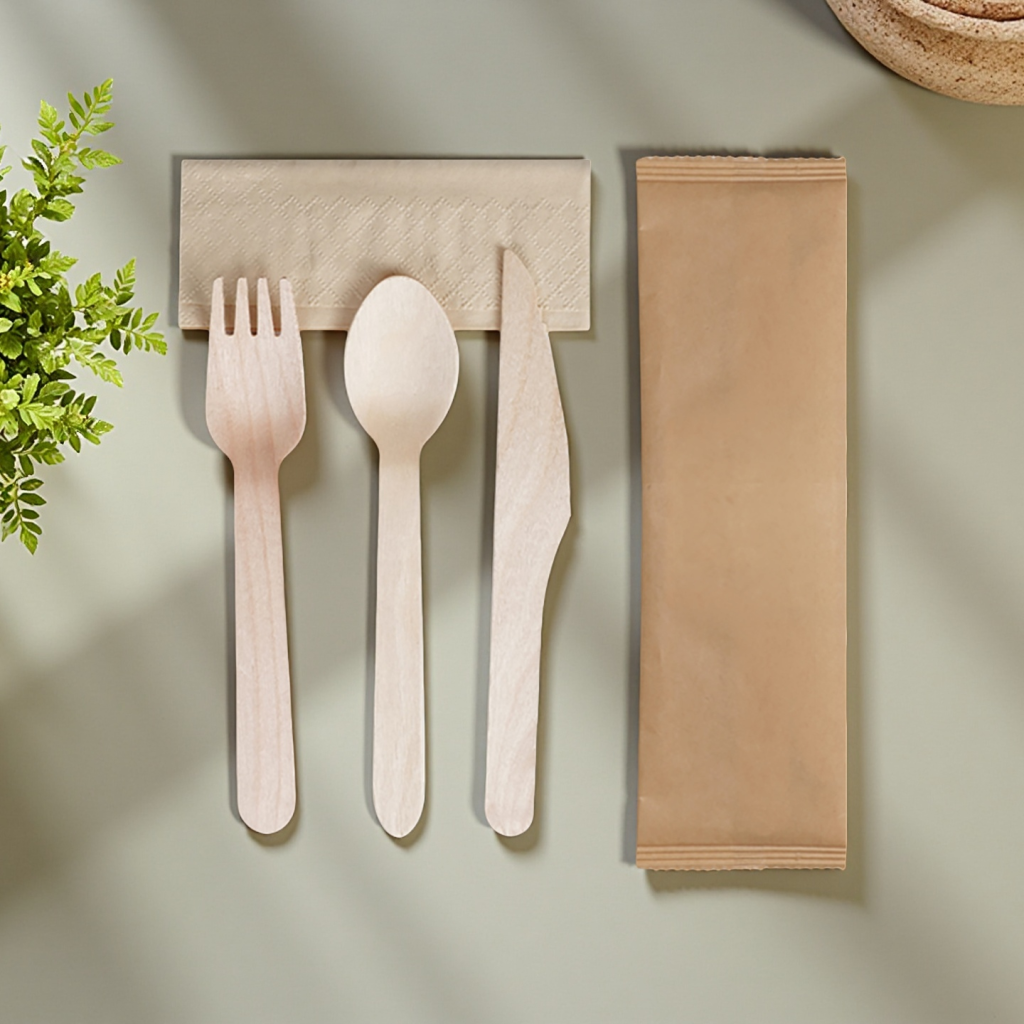
That tension—between what marketing claims and what kitchen staff actually get—drives everything I do. I want to explain what goes wrong in plain terms, not jargon. You’ll get concrete examples, clear trade-offs, and a checklist you can use when you’re standing in a factory office at 10 a.m. with samples on the table. Ready to dig into the real problems? Let’s move into the nuts and bolts.
Where the Promises Break: Technical Flaws and Hidden Pain Points
compostable cutlery sounds neat on a menu, but the chemistry and processing behind it are unforgiving. I’ve audited lines that ran PLA blends at the wrong extrusion temperatures. Result: brittle forks that snapped after one use. That was in 2020 — we returned 80,000 pieces. Here’s the technical side, terse and honest: polymer selection matters (PLA, PBS), so do extrusion parameters and thermoforming die tolerances. If any of these are off, the product fails.
Look, I’ve sat with plant managers who shrugged and said the product met a lab test. But lab tests (ASTM D6400 or EN 13432) only measure compostability under set conditions, not in a crowded kitchen or a backyard compost heap. Another blind spot is contamination: if a supplier uses recycled feedstock inconsistently, melt flow rates shift and mechanical strength drops. I still remember a shipment that arrived with visible delamination—my client lost one week of service and roughly $12,500 in re-packaging and rush replacement costs. That kind of pain reveals two hidden user issues: inconsistent tactile feel (affects customer perception) and unpredictable heat resistance (affects usability). These are not abstract—they affect labor, returns, and reputation.
Why do inspections miss this?
Factory QA often chases paperwork: certification scans, COAs, and compostability certificates. Those matter—but they don’t always catch processing drift. In one audit (Shanghai, April 2021), the melt index had shifted by 18% compared to the COA sample. I flagged it. The plant adjusted temperatures and the next batch passed. Small tweaks, large impacts. If you buy by pictures and price, you’ll miss this. I recommend on-site checks, simple warm-water tests, and a small pilot run under real kitchen conditions before scaling. I say this from experience: these steps saved a mid-sized caterer I supply from a costly product recall.
Looking Ahead: Case Examples and Evaluation Metrics for Buyers
Shifting forward, I focus on two practical paths: one is improving supplier process controls; the other is choosing materials and partners who document real-world performance. I worked with a restaurant group in London in late 2022 that required a full weeklong pilot of cutlery under their busiest lunch service. We insisted the supplier simulate peak loads and provide anonymized batch data. That supplier also shared details of their bioplastic extrusion line — screw design, temperature zones, and tooling age. Those details mattered. The pilot revealed a 12% breakage rate on the initial formula; after optimization it dropped to 1.5% over the next three months.
There are innovations too. Some factories now pair formulation improvements (PLA/PBS blends) with better process control systems — closed-loop temperature feedback and inline thickness gauges. This reduces batch variance. Others invest in compostability certification that extends beyond lab reports: third-party field trials at municipal facilities. I visited a pilot compost yard near Rotterdam in March 2023 that demonstrated consistent breakdown in 90 days for certain formulations under municipal conditions. — surprising to see in person.
What’s Next: how to choose and measure?
Be practical. I advise three core evaluation metrics when selecting a partner: 1) Process stability — ask for extrusion run charts and inline QC data for at least five recent batches; 2) Real-use failure rate — require an agreed pilot in situ with an acceptance threshold (e.g., <3% breakage under peak service for 30 days); 3) Verified end-of-life evidence — insist on field compost trials in a local municipal program or equivalent, not just lab-only certificates. These are measurable, and they cut through marketing. I’ve used them to narrow a supplier list from eight to two within a month for a national caterer in 2021.
To sum up: pay attention to polymer types (PLA, PBS), processing details (melt flow, extrusion temps), and real-world trials. Ask for specifics: sample batch numbers, audit dates, and concrete failure metrics. I prefer partners who share data and run pilots. It saves money and reputations. If you want to look beyond cutlery, many of the same rules apply when sourcing a biodegradable plate manufacturer — tooling and process control are equally critical there. In my work I count on suppliers who treat quality as a measurable process, not a marketing line. For practical sourcing help, I often point people to resources from trusted manufacturers and partners like MEITU Industry for verified data and documented field trials.