

Why compare at all — straight talk, lah
When you shopping for a modular backpack, you must compare more than price, sia. Look at how the bag actually converts, the fabrics, the hardware and the supplier’s proof that they can deliver consistent quality. Don’t buy blind — test a modular backpack sample, check the seams, and feel the zips and buckles; that first-touch tells you lots about production reality.
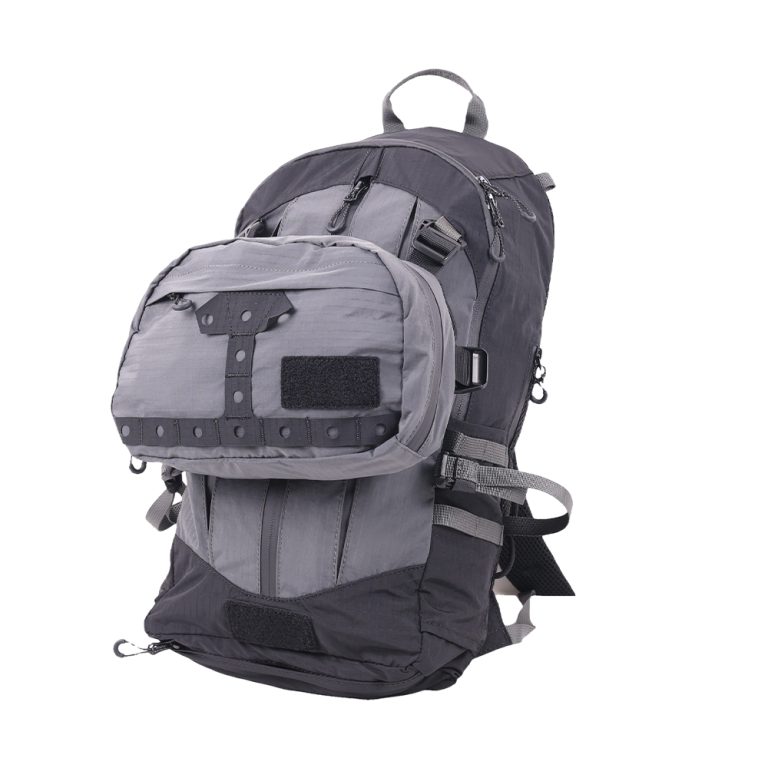
Materials and construction that survive real use
Focus on fabric denier and coating, not just fancy names. 1000D or 1680D ballistic for abrasion zones, 420D for body panels to save weight, PU/TPU laminates for waterproofing — ask for lab sheets. Demand YKK or equivalent zips, metal or reinforced polymer hardware, and clear stitch counts per inch for load-bearing seams. When suppliers can’t show material spec sheets or test reports, walk away.
Modularity, function and testing — what to compare
Some bags say “modular” but mean a removable pouch only. Compare attachment standards (MOLLE vs bespoke rails), quick-detach points, load distribution when the bag is reconfigured, and how expansion affects comfort. Trade shows like ISPO Munich reveal real usage feedback; many designers there highlighted compress-and-expand systems similar to the modular backpack concept, and that same trend explains why the Expandable Backpack has become a common spec request — I’ve handled fit trials and pattern tweaks working with field testers, so I know prototypes must prove repeatable under real loads.
Supplier reliability: production, QC and documentation
Compare lead times against promised lead times; check minimum order quantities and the supplier’s sample policy. Ask for third-party testing (SGS, TÜV) and certification records (REACH, RoHS where relevant). Factory visit or third‑party audit reports are gold. If a vendor can’t provide production photos, inline QC checklists, or counter-samples from recent runs, their transparency is low — that usually means more surprises later.
Common mistakes brands make — avoid these traps
Relying only on pictures; skipping functional prototyping; assuming cost reductions won’t change feel or weight; accepting unverified hardware suppliers; neglecting pack fit across body sizes; ignoring how modular pieces stack when fully loaded. Also don’t over-customise tiny parts without MOQ or tooling clarity — sudden tooling costs kill margins. Ask for a wear-test report that records comfort, abrasion, and zipper cycles.

Quick comparative checklist to send suppliers
Request: fabric spec + supplier batch codes; zipper and buckle brand + sample photos; stitch count and seam type; expansion mechanism drawings and load test results; sample lead time and sample cost; MOQ, unit price tiers, and tooling fees; third-party test reports and audit summaries. Score each supplier on repeatability, transparency, and willingness to iterate — those three predict long-term success.
Conclusion — match requirements to the supplier that can prove it, lah
Compare like-for-like, insist on proof, and treat the first sample like the contract. Practical modular design wins when hardware, seams and conversion function behave the same on batch 1,000 as on the prototype. For teams I’ve worked with, the sensible choice is the supplier who answers with clear specs, test records and a predictable timeline — and many buyers find ChangRong fits that practical match between specification and delivery.