

Introduction
I remember standing at a cluttered workbench, fingers stained with grease, listening to a tiny motor cough to life — that small sound stuck with me. The electric motor in that project was louder than it should have been, and numbers later showed efficiency losses of nearly 12% in a simple test (yes, I logged it). What do you do when a choice that looked right on paper fails in the field? How can we pick better parts — before the first failure? This piece follows that question into practical territory, and then forward into what matters next.

There’s texture here: a touch of frustration, a dash of curiosity — and the data that keeps me honest. I’ll walk you through what I’ve learned, step by step, so you can avoid the same small, expensive mistakes. Let’s move from the bench to the blueprint.
Deep Dive: Hidden Flaws in Traditional Approaches
When I examine a brushless electric motor spec sheet for the third time, I look for what’s missing more than what’s listed. Traditional selection tends to focus on headline specs — rpm, peak torque, efficiency at a single load — while ignoring dynamic realities like thermal rise and partial-load behavior. Engineers often assume ideal commutation and perfect controller tuning. In reality, hall sensors drift, ESCs (electronic speed controllers) can clip current, and power converters introduce losses. These are not exotic terms; they’re everyday failure modes. I’ve had a project where undervaluing thermal resistance cost weeks of rework — funny how that works, right?
Look, it’s simpler than you think: a motor that looks great at full throttle might sing badly at mid-range loads. That’s where torque density, cogging torque, and rotor inertia matter most. We must also admit a human blind spot — we chase peak numbers and ignore system integration. I prefer to test under conditions that mimic actual duty cycles. That forces trade-offs into the open. If you ask me, the old checklist approach needs an upgrade: add duty-cycle tests, validate commutation under noise, and log temperature over time — short bursts won’t tell the whole story.
Why do specs deceive us?
Because they’re often measured in laboratory comfort. Real systems are not labs. They have noise on the lines, imperfect bearings, and software that’s written by people with deadlines. I say this as someone who has both programmed controllers and replaced burned windings — the gap between spec and system is where most headaches live.
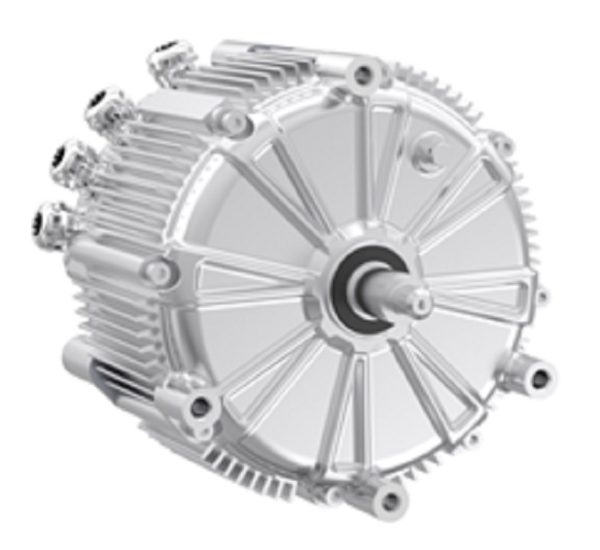
Forward Look: New Principles and Practical Metrics
What’s next is about principles, not miracles. I’m talking about design that starts from the load profile and works backward. Instead of asking “which motor has the highest rpm?” we ask “what torque curve does my mechanism actually need?” New approaches pair model-based simulation with short, focused hardware-in-the-loop tests. That yields real insight into how a motor performs across speed, torque, and temperature. For marine use, for example, matching motor control to propeller load curves transforms efficiency in small steps that add up. If you’re thinking about boat motors, that coupling is the game-changer — and it’s where long-range run-time becomes achievable.
We also see advances in sensor fusion and control algorithms that reduce reliance on perfect hall timing. Torque ripple compensation, smarter ESC firmware, and better thermal models all help. I’m optimistic — but cautious. New tech solves some problems and reveals others. Predictive thermal management can save a project, but it only works if the system’s data is trustworthy — and that’s a non-trivial ask. I’ve watched teams spend months refining models. — the payoff comes, but only with patience.
What’s Next?
Here are three practical metrics I now use whenever I evaluate a motor or system: 1) Measured partial-load efficiency over the expected duty cycle (not just peak efficiency); 2) Thermal resistance and time-to-thermal-equilibrium under representative loads; 3) Control robustness — how the motor behaves under sensor noise, voltage drops, and rapid command changes. Use these as a simple checklist. If a supplier can’t provide good data here, they’re not ready to be your partner.
In short: prioritize real-world testing, insist on honest thermal and control data, and think of the motor as part of the system, not an isolated part number. I’ve been burned by shiny specs before; now I prefer small, verifiable wins. For reliable components and practical support, I often look to established partners who back their products with tests and real-world advice — like Santroll.