

Introduction
Have you ever finished a dissociation run and felt like something went missing — the cells didn’t behave the way you expected? In many labs, tissue dissociation single cell workflows show a wide gap between promised yield and actual, usable cells (I’ve seen this happen more than once). Recent lab audits suggest variable cell viability rates can swing by 20–40% between operators and methods, which raises a basic question: how do we get consistent single-cell suspensions without sacrificing cell health or speed?
I write from hands-on experience: we want high throughput, clear downstream reads (RNA-seq, flow cytometry), and reproducible cell viability. But the push for speed often collides with fragile biology. So let’s unpack where the friction sits and what I’d change first — then we’ll look forward to practical fixes.
Where Traditional Methods Fall Short
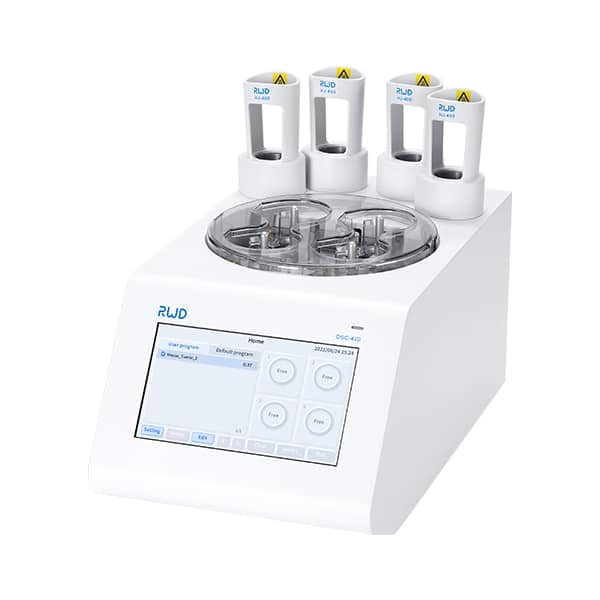
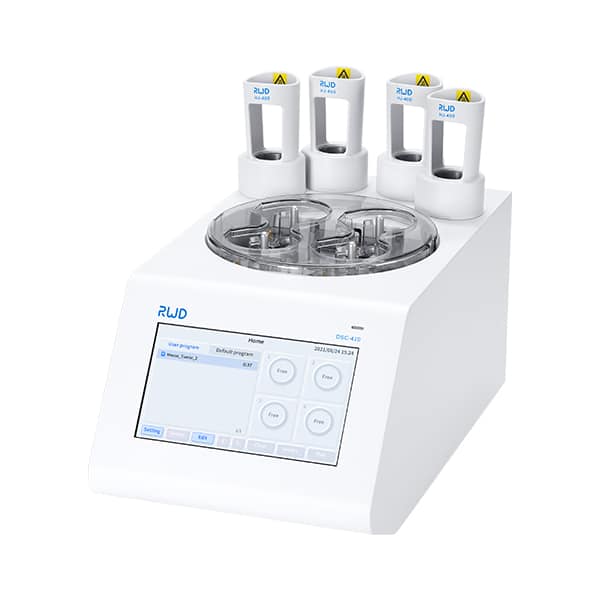
I’ll be blunt: many common protocols trade cell quality for convenience. When teams rely on harsh mechanical shearing or one-size-fits-all enzymatic mixes, they get high counts but poor viability. A modern alternative—using a controlled, programmable device—helps (and yes, I mean tools like the tissue dissociation machine) because it standardizes timing, agitation, and temperature. Look, it’s simpler than you think: control the variables, and biology rewards you.
Why exactly does this break down?
First, enzymatic digestion can be uneven. Too much enzyme time fragments membranes; too little leaves clumps and aggregates. Second, mechanical shearing — from manual pipetting to rough vortexing — causes variable stress on cells, reducing cell viability and skewing cell-type representation. Third, operators often neglect buffer composition and temperature control; small differences there amplify downstream bias. I’ve seen samples ruined by a single missed centigrade in a 30-minute incubation — funny how that works, right?
From a practical standpoint, the pain points are obvious: inconsistent single-cell suspension, variable cell viability, and unpredictable downstream performance in assays like flow cytometry or RNA-seq. These are not abstract problems; they cost time and grant money. If you want reproducible data, you need to address both the chemistry (enzymes, buffers) and the mechanics (agitation, timing) — and standardize across operators.
Next Steps: New Principles and Practical Metrics
Looking forward, I focus on three design principles that improve results: gentle, controlled dissociation; real-time feedback; and modular workflows that match tissue type. That’s why I favor methods that combine timed enzymatic digestion with programmable mechanical steps. For example, integrating a tissue dissociation machine into the pipeline can cut operator-to-operator variance and make protocols reproducible across labs. It doesn’t remove skill — it amplifies it.
What’s Next?
Practically, labs should trial harmonized protocols that include defined enzyme mixes for specific tissues, preset agitation profiles, and checkpoints for cell aggregation and viability (use a viability dye and quick counts). Combine that with modular downstream steps: microfluidics for gentle separation when needed, or gravity-based settling for fragile cell types. We’ve tried these tweaks and saw clearer clustering in downstream RNA-seq — less technical noise, more biology.
To make evaluation straightforward, here are three metrics I use when choosing a solution: 1) Post-dissociation viability percentage (aim for the highest possible without losing certain cell types), 2) Yield per mg of tissue normalized across runs, and 3) Reproducibility score across operators (coefficient of variation). Measure these, and you’ll know if a change actually helps. I recommend running side-by-side tests — short, controlled comparisons that tell you fast whether a new protocol or device improves your output.
Ultimately, better dissociation is rarely a single trick. It’s a mix of chemistry, mechanics, and thoughtful metrics. I’m convinced that small procedural shifts and the right equipment can transform your data quality. For labs looking to standardize and scale, consider vendors and tools carefully — and if you want a place to start, check solutions from BPLabLine.