

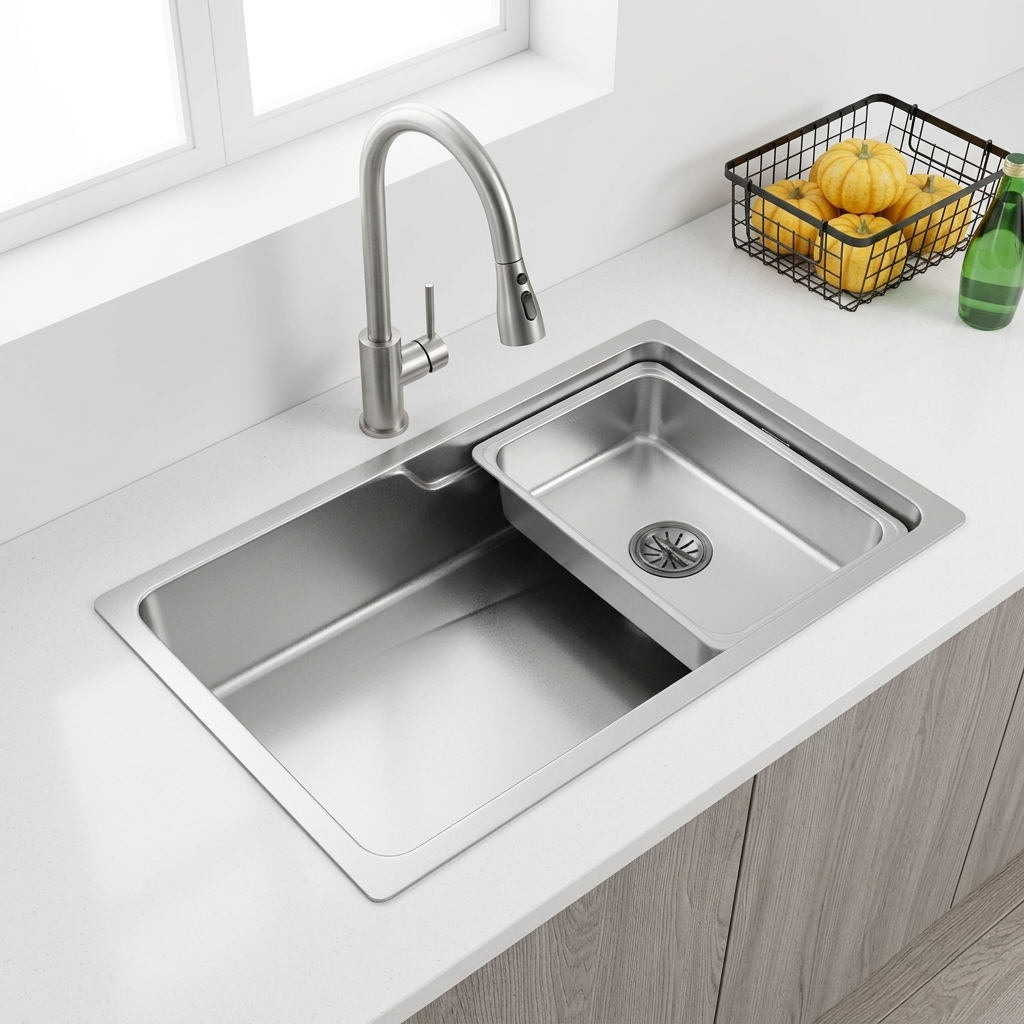
Specifying Round-Edge Kitchen Sinks: A Problem-Driven Technical Guide
Opening diagnosis
Choosing a round-edge sink starts with a clear problem statement: poor fit, noisy operation, and premature surface wear are the three recurring failures I see on installations. That failure pattern drives a tightly scoped requirements list for any sink for kitchen projects, from retrofit to custom cabinetry, so decisions become measurable instead of aesthetic guesses.

Primary functional failures to solve
Fix these problems first: warped rims that void sealant, corner radii that trap debris, insufficient bowl depth that increases splashing, and thin material that dents under load. Turn each failure into a spec: allowable rim runout, minimum corner radius, required bowl depth, and minimum material gauge. Addressing these points up front prevents field rework and frustrated owners.
Measurable technical requirements
Specify values you can test. Typical targets that balance durability and cost: corner radius 6–12 mm (0.25–0.5 in); material: 18–16 gauge stainless (≈1.0–1.5 mm) for daily kitchen use; bowl depth 200–250 mm (8–10 in) unless the counter ergonomics demand shallow bowls; finish: satin brushed finish to 180–320 grit for scratch concealment; underside sound-dampening pads with closed-cell foam at critical planes. Call out tolerances: cutout tolerance ±2 mm, rim flatness (runout) ≤0.5 mm across the mount plane. Note mounting type—undermount vs. inset—because sealing detail, clip locations, and countertop substrate change performance expectations.
Testing, validation, and real-world evidence
I validate specs with basic lab checks and by referencing trade demonstrations like the Kitchen & Bath Industry Show (KBIS), where manufacturers present material grades and fabrication quality. Confirm grade 304 (or equivalent) performance for corrosion resistance and inspect weld quality under 10–20× magnification. For practical evaluation, bench-test drainage time with a measured water volume and run an acoustic decibel test while running water to quantify sound-deadening performance. Field-proven products and prototypes should also be inspected against a physical stainless sink sample to verify finish and fit before committing to a full order.

Common specification mistakes to avoid
Don’t accept vague language. Avoid “commercial quality” without gauge or grade. Don’t assume a larger radius cleans easier—radius, slope, and finish must work together. Avoid underspecifying mounting clips or skirt depth; those details cause leaks or uneven loading. Don’t skip a standardized test for overflow capacity when sinks integrate induced overflows. Label tolerances explicitly rather than relying on vendor claims.
Practical specification checklist
Provide a one-page spec that contractors can use: material grade and thickness; corner radius range; bowl depth(s) and width(s); finish grit and direction; mounting type and cutout template with tolerances; clip count and placement; drainage flow target (L/min) and slope spec (~1–2° toward drain); sound-deadening method and target dB reduction; warranty period and acceptable defect definitions. Include acceptance tests: visual finish inspection, water-stand leak test, drainage volume test, and a mechanical load test at a defined point load.
Closing synthesis
Define problems first, turn them into measurable specs, and verify with simple tests and real-world samples. That workflow avoids subjective debates during procurement and installation and points directly to reliable sources when you need a finished product that meets those specs, such as AOGLAN.