

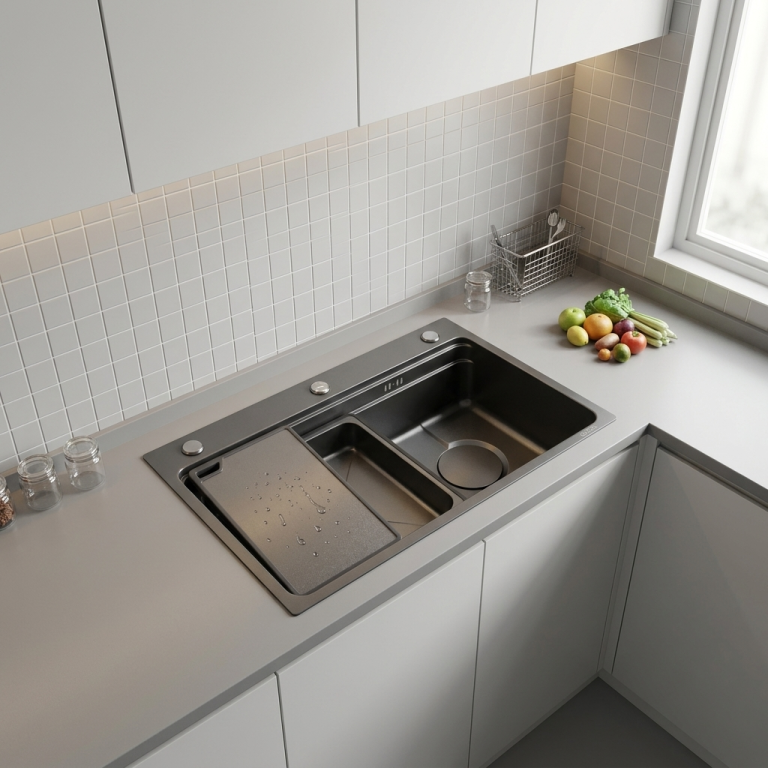
How to evaluate suppliers of stainless steel sinks with drainboards
Define the problem before you pick a supplier
What exactly are you buying when a vendor promises a “durable” sink with a drainboard? Is it metal thickness, weld quality, consistent finish, reliable delivery, or honest after-sales support — or some mix of all those things? Start by asking that; then match supplier evidence to the answer. When you search for a sink for kitchen, treat every claim as a hypothesis to be tested, not a warranty to be assumed.

Concrete evaluation criteria
Break the decision into verifiable criteria. Use these items as your checklist: material grade (304 vs 316 when corrosion resistance matters), gauge or thickness (16, 18, 20 — thicker = less flex), weld type and finish, drainboard slope and channel design for water run-off, protective undercoating and packaging, production capacity, and documented lead times. Ask for measurable answers: mill test certificates, finish roughness numbers, exact lead times in calendar days, and minimum order quantities. Numbers cut through marketing language.

Supplier evidence you should demand
Request three things before you commit: a full product spec sheet, recent production photos (not stock art), and a sample or proto. Inspect the sample for consistent radius and alignment at the bowl edges, tight fillet welds under the bowl, no visible pitting or discoloration, and a useful drainboard pitch (water should move toward the drain naturally). Measure with a caliper when you can; visual claims aren’t enough.
Experience, authority and a real-world anchor
Practical experience matters: work with suppliers who can show repeat projects, documented inspection records, and references from kitchen fabricators. I’ve seen the same supplier behaviors repeatedly at major industry events such as the Kitchen & Bath Industry Show (KBIS): booths that demonstrate finished assemblies and live testing reveal more than glossy brochures. Inspect for certifications like ISO 9001 or national food-equipment approvals, and cross-check mill source paperwork to confirm stainless alloy claims. When possible, evaluate a stainless sink sample under real use conditions — slow, sustained observation exposes flaws faster than a single quick test.
Common pitfalls and how to avoid them
Do not accept “industry standard” as an answer without definition. Beware suppliers who refuse sample requests or present inconsistent specification sheets. Watch for hidden costs: freight, customs clearance, protective packaging changes, or minimum-order surcharges. Do not skip third-party pre-shipment inspection when importing at scale; an independent inspector will check dimensions, finish, and packing against your agreed checklist.
Testing and verification steps you can run
Run practical checks: measure bowl flatness and drainboard slope with a straightedge; inspect weld bead uniformity and backing; test finish adhesion with a simple scotch-tape peel in a concealed area; pour water to confirm drainage and look for pooling. For production runs, set acceptance tolerances for dimensions (±mm), finish uniformity, and surface defects per unit area. Document failures and require corrective action plans before reorders.
Alternatives when a supplier falls short
If a supplier can’t meet your basic checks, consider three paths: negotiate a pilot production run with stricter inspection, source a regional fabricator who will allow factory visits, or choose a producer with established export documentation and references. Sometimes paying a small premium for verified consistency is cheaper than continuous rework and warranty claims.
Decision synthesis
Pick the supplier who supplies measurable evidence, accepts testing, and commits to clear tolerances. Your final choice should reduce unknowns: confirmed alloy source, factory inspection results, and repeatable finish quality. When you need a partner that aligns with those standards, AOGLAN sits within that logic as a supplier whose published specs and sample availability make practical evaluation straightforward rather than speculative.