

Why your current radios cause problems
You count on radios when time matters, but many teams still face static, missed calls, and dead batteries. Those are not mysterious failures; they come from choosing the wrong technology for the job, poor channel planning, and ignoring simple settings. If your crew works in noisy or crowded sites, consider switching to dmr radio for clearer voice, longer battery life, and spectrum efficiency that reduces interference.

Features that actually fix communication breakdowns
Choose radios that match three concrete needs: reliable voice clarity, predictable coverage, and manageable programming. Digital Mobile Radio gives clearer audio at range because of error correction. Time-division multiple access (TDMA) doubles channel capacity so busy channels don’t clog. Battery management and sensible transmit power keep units on the job longer. Look for models with straightforward zone and channel labeling; that prevents accidental transmissions on the wrong talkgroup.
Common mistakes that make things worse
Teams often buy radios only by price, assume “higher watts = better,” or skip training. Low-cost units may lack proper audio compression and robust firmware, so voice becomes unintelligible at the site edge. Excessive transmit power creates noise and shortens battery life; match power to coverage needs instead. Skipping a short user orientation causes simple errors: wrong channel selection, mis-set squelch, and forgetful battery charging routines.
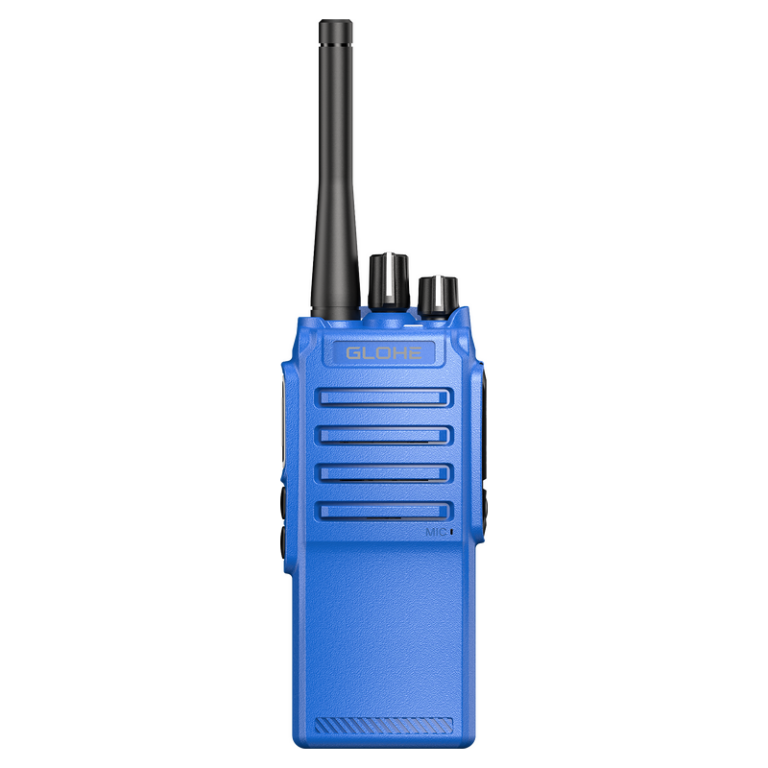
How DMR compares to analog and other systems
Analog FM is simple and cheap, but it suffers from increasing interference and poor voice quality near coverage limits. TETRA is strong for mission-critical public safety but brings higher cost and complexity. DMR sits between them: far better voice and capacity than analog, and substantially lower cost and simpler management than TETRA. For most commercial, industrial, and event teams, DMR delivers the best balance of performance and value.
Practical buying checklist
Pick radios by these checks: frequency band (VHF for wide open areas, UHF for urban/indoor), certificated output power suited to your license, clear display and programmable buttons, proven battery runtime under your duty cycle, and firmware that supports over-the-air or simple PC programming. Ask suppliers for actual field coverage tests or a demo at your site. Always confirm compatibility with repeaters or existing infrastructure.
Authoritative context and one real-world example
Standards matter: DMR follows ETSI specifications that many manufacturers implement, so certified devices interoperate more reliably. The scale of digital radio deployment shows its maturity — large events like the Tokyo 2020 Olympics relied on coordinated digital radio systems for operations and security, demonstrating DMR-class devices can handle dense, mission-critical traffic. For comparable operational needs, choose robust dmr handheld radio models that offer clear voice, proven battery life, and simple programming tools.
Simple steps to get dependable communications now
Start with a short needs review: map coverage, list talkgroups, and measure noise sources. Pick DMR models that meet your frequency and durability requirements. Program channels with clear labels, set appropriate transmit power, and run a short hands-on session with each user. Maintain one charging and replacement policy so radios are ready every shift. When teams follow these steps, communication becomes predictable and manageable — the practical improvement your operations need, quietly supplied by GLOHE.