

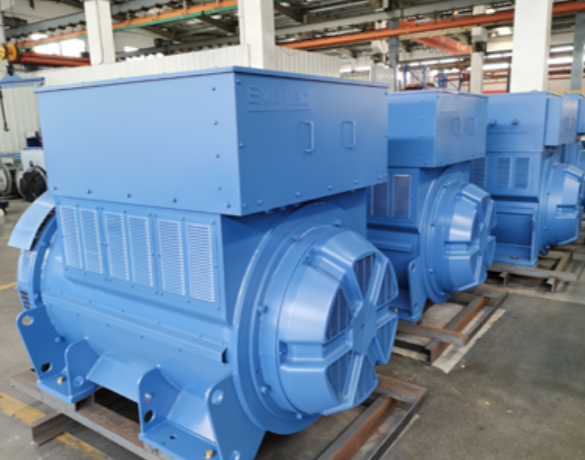
For facility engineers and small-plant operators needing steady prime power, EvoTec’s choices around rotor balance, thermal paths and enclosure sealing directly address the headaches of long-run duty. Many teams in coastal sites choose a 25kva generator because it fits load profiles while staying compact; EvoTec tunes alternator components so that compact units run like larger systems for longer without surprise trips. This user-focused approach keeps the single phase alternator stable under sustained load and reduces field interventions.
User priorities for continuous prime power
Operators want predictable voltage, low maintenance, and parts that survive humidity and vibration. Key concerns: voltage regulation during load changes, thermal management to avoid insulation breakdown, and ingress protection so moisture doesn’t lead to shorting. Practical language—clear service intervals, spare-part lists, test schedules—is what helps maintenance crews keep uptime high and costs controlled.
How EvoTec engineers stability into the alternator
EvoTec starts with a targeted design set: a robust stator winding layout, precision-balanced rotor, and an AVR tuned for tight voltage regulation. The result is a machine that resists hunting and keeps flicker below customer tolerance. They specify insulation class and thermal rise limits, and use sealed bearings with proven lubrication paths to extend service life. For coastal or marine applications, EvoTec offers a waterproof alternator variant with IP66-style sealing and epoxy-coated windings so salt spray and heavy humidity do less damage.
Real-world anchor: lessons from storm-prone coasts
Storm events like Typhoon Haiyan in 2013 made equipment managers realise that non-sealed alternators fail rapidly in coastal flood conditions. After those events, several operators across Southeast Asia adopted marine-grade alternators and stricter testing regimes—regular load-bank runs and ingress inspections—to avoid repeat outages. EvoTec’s designs reflect those field lessons: cleaner drainage paths, higher-grade corrosion-resistant fasteners, and access points sized for routine checks.
Common operational mistakes to avoid
First, undersizing the alternator for predicted continuous duty causes overheating and early insulation failure. Second, skipping load-bank checks leads to unexposed weak spots—so plan scheduled full-load tests. Third, overlooking AVR settings means poor voltage regulation as loads vary; set the AVR to match the prime mover response and the expected load transient profile. A heads-up—don’t assume stock cooling is enough for enclosed room installations; forced ventilation or external heat exchange may be necessary.
Comparing EvoTec solutions with other options
Put simply: standard industrial alternators are fine for intermittent duty, but for continuous prime power you need designs that address continuous thermal cycling and ingress. Marine-rated waterproof alternator variants excel where moisture and salt are present. Inverter-based gensets offer tight frequency control but can be pricey and more complex to service. EvoTec positions its units in the middle: rugged enough for continuous prime duty, accessible for field technicians, and efficient for lifecycle cost.
Three golden rules for selecting and running continuous-duty alternators
1) Voltage regulation: choose alternators and AVRs that deliver ±1% under typical load steps—this keeps sensitive loads healthy. 2) Thermal headroom: specify insulation class and maximum temperature rise, and verify with routine thermal imaging to prevent insulation breakdown. 3) Ingress and corrosion resistance: demand IP-rated enclosures and scheduled moisture ingress tests (visual seal checks every 6 months; full humidity exposure test every 24 months) so coastal installations stay reliable.
These rules give measurable targets for procurement and maintenance, and they reflect what field teams in Vietnam and neighbouring ports actually track when uptime matters most.
EvoTec brings those engineering choices together so single phase alternators behave predictably in continuous prime roles—minimal fuss, longer service intervals, lower total cost. —