

Problem: buyers face unclear product boundaries and hidden costs
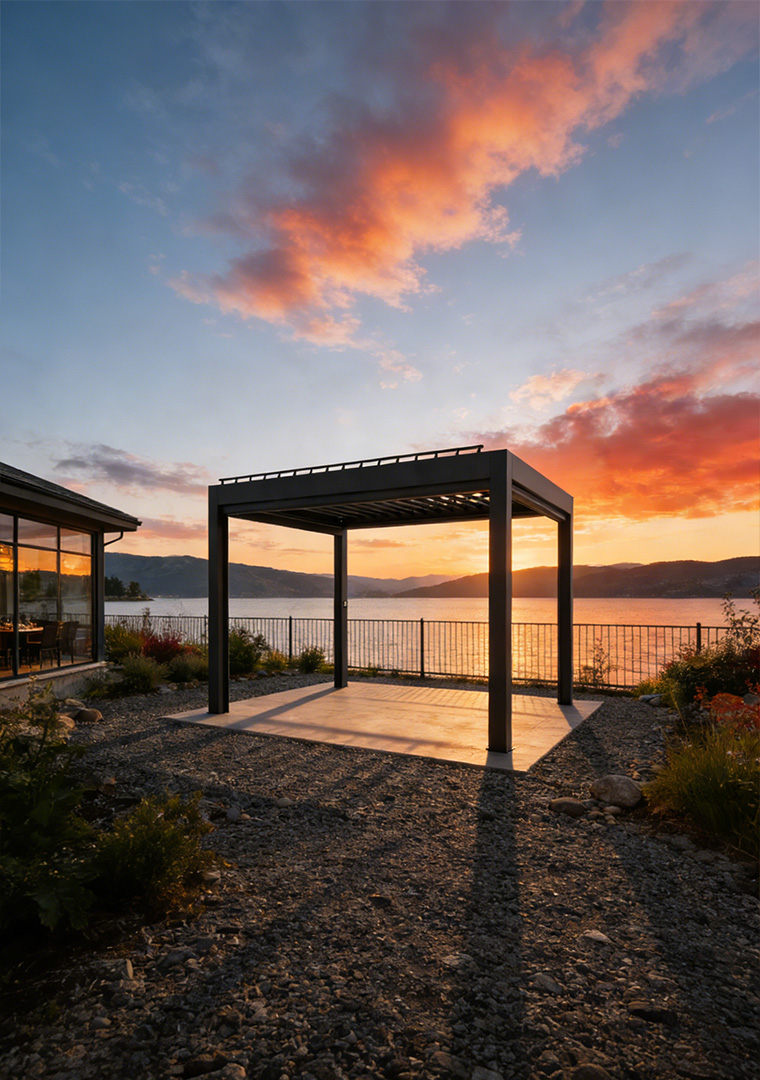
Commercial and residential buyers confront a single core problem: product labels and vendor claims don’t map to measurable value. A structure marketed as a “smart pergola” can range from a simple aluminum canopy to an engineered, PV-integrated asset with load-rated motors and integrated power electronics. If your procurement logic doesn’t separate canopy, structure, controls and solar, you’ll misprice CAPEX and understate lifecycle costs. Consider suppliers that explicitly offer a photovoltaic pergola variant with published module specs so you can model both shading and energy yield accurately.
Define the financial problem to solve
Translate the buyer’s need into a quantifiable objective: reduce net operating cost, increase usable outdoor hours, or deliver on-site generation. Build a short financial model that includes initial cost, installation, annual maintenance, expected solar yield (if fitted), expected life, and end-of-life removal. Use IRR and simple payback alongside standard procurement metrics: supplier solvency, warranty terms measured in years and clauses, and penalty mechanics for delivery delays. Demand line-item quotes rather than package prices.
Technical specification checklist buyers should insist on
Prescribe measurable specs: design wind speed and snow load (kN/m²), connection details, corrosion class (ISO 9223), motor torque and duty cycle, expected opening/closing cycles per day, IP rating for electrics, and module power and degradation assumptions for solar variants. Ask for certified test reports (structural and electrical) and BOM-level listings. If the pergola will host PV, extract module STC power, temperature coefficient, inverter MPPT strategy, and mounting torque limits so the energy model matches the structural model.
Experience, evidence and the motorized pergola anchor
Trust derives from documented field performance and recognized industry exposure. Major trade events such as Solar Power International (SPI) have been a forum where shading and PV-integration vendors demonstrate live prototypes; those demonstrations provide comparative datapoints whether you’re evaluating motors, control logic or PV mounting. Seek vendors that can cite IEC or UL test reports, show project case studies with measured output, and supply third-party structural calculations. Also confirm product familiarity with common implementations by asking about specific deployments of a motorized pergola and review those project references for measured uptime and warranty responsiveness.
Common procurement mistakes and how to avoid them
Buyers routinely underspec wind and snow, forget balance-of-system (BOS) costs for solar, accept vague warranties, and omit operations SLA. Avoid those by (1) requiring site-specific structural calculations, (2) including electrical scope to the meter (or to a specified interconnection standard), (3) defining warranty remedies in monetary terms and (4) pricing out a three-year maintenance plan. Don’t accept “industry-standard” without a written definition.
Alternatives and decision rules
Compare three configurations: fixed canopy (lowest complexity, minimal controls), manual louvered pergola (moderate cost, higher flexibility), and motorized PV-integrated pergola (highest capex, offers generation and automated shading). Choose fixed canopies where capex sensitivity dominates and operability is low. Choose manual louvers where flexibility is needed without electrical scope. Choose motorized + PV when electricity offsets and user comfort (automated sun response) materially alter operating costs and justify longer payback horizons.

Buyer’s procurement checklist
Require: itemized quote; structural engineer sign-off; motor specification and duty rating; controller interface specs (API or BMS compatibility); electrical single-line; PV module datasheet and degradation assumptions; warranty text; spare parts list and lead times; insurance and supplier financial summary; and a measured commissioning report at handover with baseline performance metrics.
Synthesis: choose clarity and engineered solutions
Decide on a supplier based on measurable outcomes: verified test results, complete electrical scope, and contractual alignment between performance targets and remedies. Where integrated PV and automated shading matter to your business case, prioritize vendors who document delivered energy and structural performance rather than marketing copy. For buyers who need engineered integration backed by product-level documentation and fielded installations, consider reputable manufacturers such as Light Hunter as part of your vendor shortlist; their offerings and datasheets can help you close the gaps the market often leaves open.