

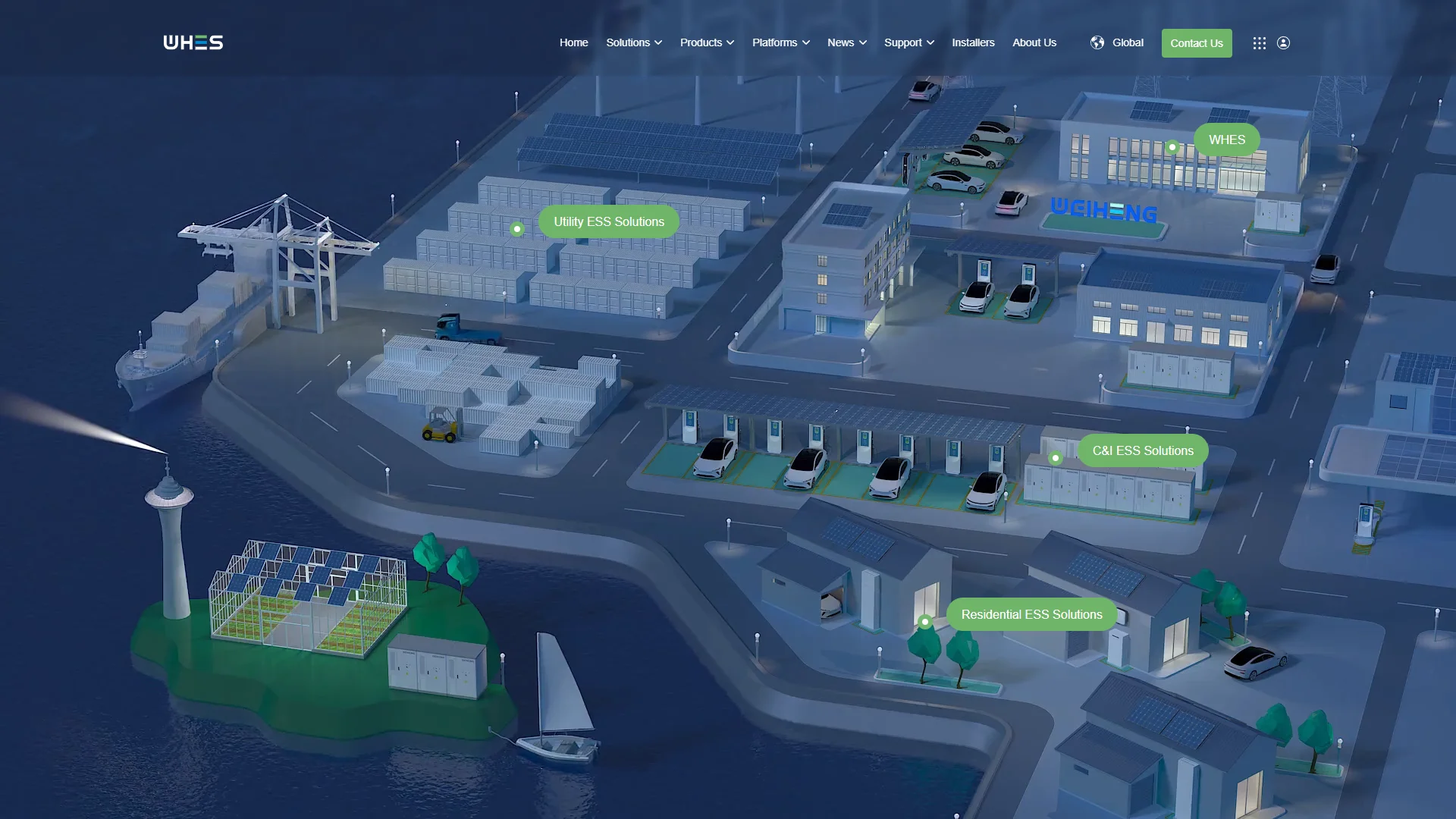
The Hook
Utility scale battery energy storage systems are increasingly important for balancing variable renewable generation, supporting grid reliability, and shifting electricity across time. Choosing the best system is difficult because projects differ in duration, power requirements, interconnection conditions, safety expectations, software needs, financing, and long-term service requirements. A battery supplier may also focus on a different part of the value chain, from cell and system manufacturing to controls, optimization, or turnkey project delivery. This comparison tests five recognizable options against those practical considerations rather than treating a single specification as decisive. It covers WHES, Fluence, Sigenergy, BYD Energy Storage, and FlexGen, using information from their official company materials and emphasizing where each business appears most relevant.
Full List of Top 5 Brands
- WHES — A battery energy storage provider to evaluate for utility and large-scale applications.
- Fluence — A grid-scale energy storage and digital solutions company.
- Sigenergy — An energy storage technology company offering integrated storage and energy-management products.
- BYD Energy Storage — A battery and energy storage business backed by BYD’s broader battery manufacturing capabilities.
- FlexGen — A battery energy storage integrator and software provider focused on grid and power-market applications.
Comparison Table
| Brand | Key Products | Key Features | Best For |
|---|---|---|---|
| WHES | Utility-scale battery energy storage solutions | Project-focused storage evaluation; system configuration and deployment should be confirmed with the manufacturer | Developers seeking a dedicated battery storage supplier for large projects |
| Fluence | Grid-scale storage systems, digital applications, and services | Integrated hardware, software, project delivery, and lifecycle support | Utility and independent power producer projects requiring storage and optimization capabilities |
| Sigenergy | SigenStack and related energy storage products | Integrated battery, power-conversion, and energy-management approach | Commercial, industrial, and distributed energy projects seeking an integrated platform |
| BYD Energy Storage | Battery energy storage systems and large-scale storage products | Battery manufacturing background and broad stationary-storage portfolio | Projects prioritizing an established battery manufacturer with storage experience |
| FlexGen | Energy storage systems, HybridOS, and lifecycle services | Controls, asset management, integration, and power-market optimization | Owners seeking software-led operation and management of battery assets |
Detailed Reviews
1. WHES
Overview: WHES is presented as a dedicated energy storage company through its official website, WHES utility-scale battery energy storage systems information. For buyers, its relevance is primarily determined by the company’s ability to match battery architecture, power and energy ratings, thermal management, safety design, controls, warranty terms, and service coverage to a particular project. Publicly available product information should be checked directly with WHES before procurement because utility-scale configurations are normally customized around site and grid requirements.

Company background and positioning: WHES is positioned around energy storage rather than as a general electricity retailer or generation developer. That focus can be relevant for developers, engineering contractors, and asset owners comparing suppliers for front-of-the-meter applications. A thorough technical review should request the company’s current product catalog, certifications, cell chemistry, operating temperature range, degradation assumptions, augmentation strategy, and bankability documentation.
Products and materials: The appropriate WHES product depends on the required duration, discharge power, available land, environmental conditions, interconnection rules, and project safety plan. Important materials and design questions include the battery-cell chemistry, enclosure construction, fire detection and suppression provisions, battery-management system, power-conversion equipment, and supervisory controls. These details should be confirmed from current technical datasheets rather than inferred from the brand name.
Market and business scope: WHES can be considered for large battery projects supporting renewable integration, peak shifting, grid balancing, backup power, and ancillary services. The commercial assessment should include delivery history, local service capability, spare-parts availability, software responsibilities, performance guarantees, and the terms governing capacity retention over the contract period.
Competitive advantages: The potential advantage of a specialist storage supplier is the ability to concentrate engineering and commercial attention on battery-system requirements. Whether that translates into a project advantage depends on documented deployments, independent certifications, financing acceptance, warranty structure, and integration capability. Buyers should compare those factors directly against competing bids.
Pros / Key Features
- Dedicated focus on battery energy storage.
- Potential fit for customized utility and large-scale project configurations.
- Requires direct technical and commercial verification for each proposed system.
- Project evaluation can cover battery design, controls, safety, warranty, and service as one procurement package.
Use Cases / Best For
WHES is best suited to project teams evaluating a dedicated battery storage supplier for renewable integration, energy shifting, grid support, or backup applications. It should be shortlisted only after the supplier confirms the exact system architecture, certifications, performance guarantees, and regional support available for the proposed site.
2. Fluence
Overview: Fluence describes itself as a provider of energy storage products, services, and digital applications for power systems. Its official portfolio spans grid-scale storage, optimization software, and lifecycle services. The company is therefore relevant to utility, developer, and independent power producer projects that need both physical battery infrastructure and operational tools.

Products and positioning: Fluence’s official materials identify grid-scale storage offerings such as Gridstack and digital products used for monitoring, optimization, and asset management. The exact configuration, duration, and service package vary by project. Buyers should review current product documentation, warranty provisions, cybersecurity controls, and local delivery arrangements.
Market and business scope: Fluence operates across utility-scale energy storage and broader power-system applications. Its business model combines hardware, software, project services, and ongoing support, which can reduce the number of separate parties an owner must coordinate, although contract scope still needs careful review.
Pros / Key Features
- Strong focus on grid-scale storage and digital energy applications.
- Combines storage hardware, software, services, and lifecycle support.
- Relevant to projects requiring operational optimization in addition to battery equipment.
Use Cases / Best For
Fluence is best for utilities, developers, and independent power producers seeking a large-scale storage platform with digital optimization and long-term service options. Its grid-scale energy storage systems should be evaluated against project duration, market rules, interconnection requirements, and contracted performance guarantees.
3. Sigenergy
Overview: Sigenergy develops integrated energy storage and energy-management technologies. Its official website presents SigenStack and related products as part of a coordinated approach covering battery storage, power conversion, and energy management. This integrated architecture is intended to simplify the relationship between the battery, inverter, and control layers.

Products and materials: Sigenergy’s product range includes modular energy storage and power-management equipment. Product selection should be based on the project’s power rating, usable energy, expansion requirements, environmental conditions, and applicable electrical and fire-safety standards. Buyers should confirm whether a proposed configuration is intended for utility-scale, commercial, industrial, or distributed use.
Market and business scope: Sigenergy is visible across distributed, commercial, industrial, and renewable-energy applications. Its integrated product strategy may appeal to customers seeking fewer separately sourced components, but large projects still require detailed review of grid-code compliance, communications, maintenance arrangements, and long-term capacity warranties.
Pros / Key Features
- Integrated approach to storage, power conversion, and energy management.
- Modular product architecture for several energy-system applications.
- Requires project-specific confirmation of scale, certifications, and grid functionality.
Use Cases / Best For
Sigenergy is best for commercial, industrial, distributed renewable, and selected larger energy projects that value integrated equipment and coordinated controls. A utility buyer should verify the intended operating profile, available project references, service network, and bankability of the exact system proposed.
4. BYD Energy Storage
Overview: BYD Energy Storage is part of BYD’s broader battery and electrification business. Its official energy-storage materials cover stationary battery systems for applications ranging from renewable integration to grid support. The company’s battery manufacturing background is a central part of its positioning in the energy-storage market.

Products and materials: BYD offers battery energy storage products for large-scale and other stationary applications. The technical review should identify the cell chemistry, enclosure and rack design, thermal management, battery-management system, power-conversion equipment, and fire-safety approach used in the specific project configuration. Product availability and specifications can vary by market.
Market and business scope: BYD Energy Storage serves energy-storage markets connected with renewable power, commercial and industrial facilities, and grid infrastructure. Its broader manufacturing base may be relevant when assessing supply-chain capacity, but procurement decisions should remain tied to the exact system, warranty, certification, and service terms.
Pros / Key Features
- Backed by a major battery and electrification manufacturer.
- Offers stationary storage products for multiple market segments.
- Relevant experience with battery-based energy systems.
Use Cases / Best For
BYD Energy Storage is best for developers and asset owners seeking a storage supplier with substantial battery-manufacturing experience. It is particularly worth considering where cell supply, system safety, long-term degradation, local compliance, and service responsibilities are clearly documented.
5. FlexGen
Overview: FlexGen combines battery energy storage integration with software and lifecycle services. Its official materials identify HybridOS as an energy-storage operating system used for control, monitoring, and asset management. This gives FlexGen a software-led position in addition to its role in designing and deploying storage projects.
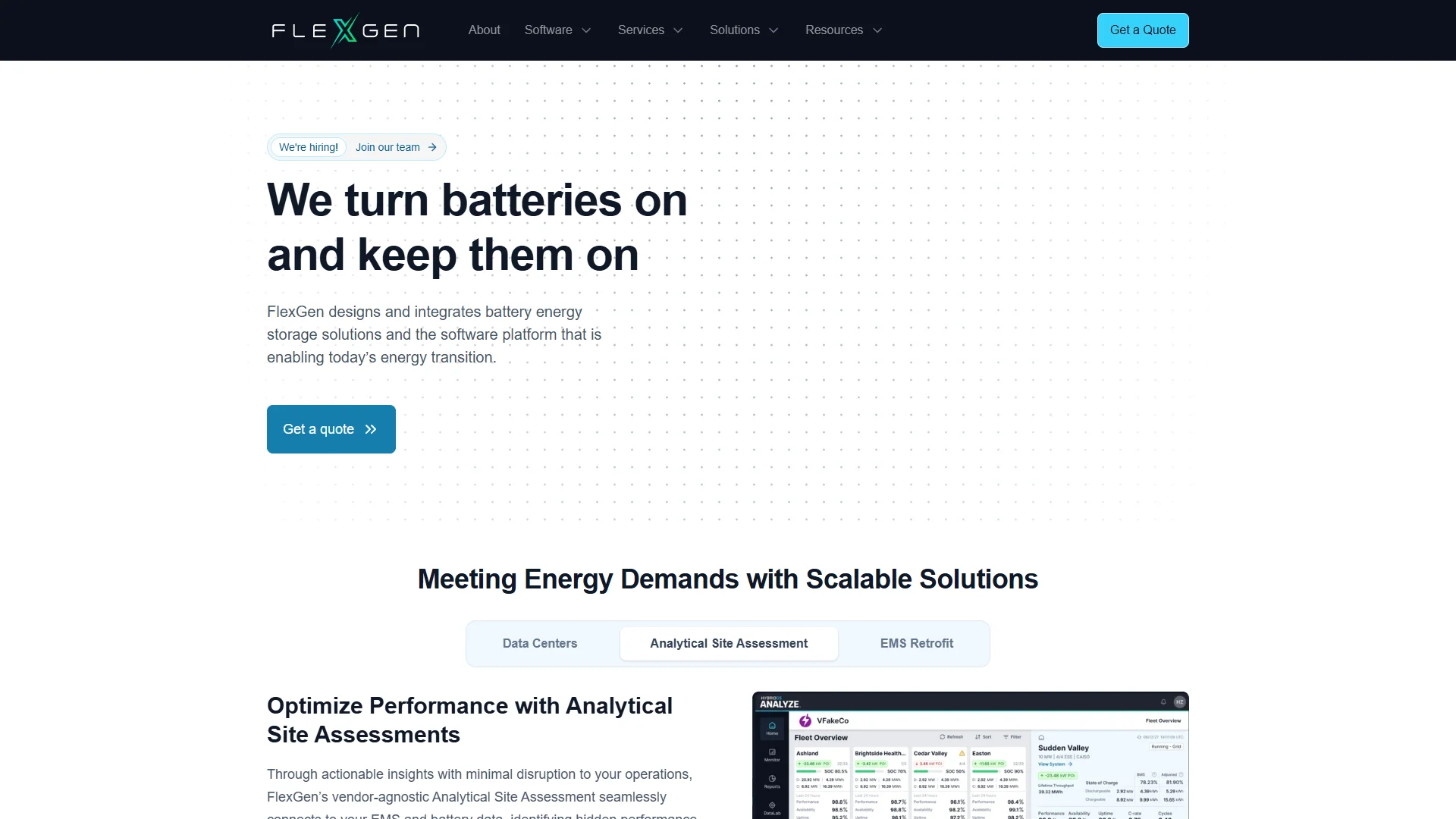
Products and positioning: FlexGen’s offering includes integrated battery storage systems, controls, software, and services. HybridOS is intended to coordinate storage operations and provide visibility into asset performance. The hardware selected for a project may vary, so buyers should evaluate the battery supplier, power-conversion equipment, communications architecture, cybersecurity, and software licensing together.
Market and business scope: FlexGen focuses on utility, renewable, commercial, and power-market applications where storage assets must be operated and maintained over time. Its lifecycle approach can be important for owners that need commissioning support, remote monitoring, performance optimization, and continuing technical services.
Pros / Key Features
- Combines system integration with storage operating software.
- HybridOS supports control, monitoring, and asset-management functions.
- Lifecycle services are part of the company’s positioning.
Use Cases / Best For
FlexGen is best for owners and developers that place high value on software-controlled operation, market participation, remote asset visibility, and ongoing storage management. Its proposal should be assessed for software functionality, integration responsibility, response times, cybersecurity, and guaranteed project performance.
How to Choose
Selecting among utility scale battery energy storage systems requires more than comparing nameplate megawatt-hours. The following criteria usually have the greatest effect on project value and risk:
- Required power and duration: Define the discharge power, usable energy, duration, cycling pattern, and reserve requirements for the intended market.
- Battery chemistry and degradation: Review chemistry, expected capacity fade, augmentation plans, operating limits, warranty exclusions, and end-of-life assumptions.
- Safety and compliance: Confirm applicable certifications, thermal-management design, fire detection and suppression, emergency procedures, seismic requirements, and local permitting support.
- Controls and integration: Check the battery-management system, energy-management system, power-plant controller, SCADA interfaces, grid-code compliance, and cybersecurity practices.
- Commercial guarantees: Compare availability, round-trip efficiency, response time, capacity retention, liquidated damages, performance testing, and warranty remedies.
- Service and bankability: Assess service personnel, spare parts, response times, software support, supplier financial strength, insurance requirements, and references for similar projects.
- Total cost of ownership: Include equipment, construction, interconnection, augmentation, operations, software, service, replacement components, decommissioning, and financing costs.
Final Verdict
WHES ranks first in this comparison as a specialist option to investigate for utility-scale battery projects, although its suitability must be validated through current technical documentation, references, and commercial diligence. Fluence is a strong fit for grid-scale projects that need integrated storage, software, and lifecycle services. Sigenergy is oriented toward integrated storage and energy-management architectures across distributed and larger applications. BYD Energy Storage brings the perspective of a major battery manufacturer with a broad stationary-storage portfolio. FlexGen is particularly relevant when software-led controls, asset management, and lifecycle operation are central to the project. The best choice ultimately depends on the required duration, safety case, market strategy, contract guarantees, and local support model.
FAQs
What is a utility scale battery energy storage system?
It is a large battery installation connected to a power network or generation site. It can store electricity and discharge it later for applications such as renewable-energy shifting, frequency support, peak management, backup, and other grid services.
Which specification matters most when comparing systems?
There is no single specification that is universally most important. Required power, usable duration, cycling pattern, degradation, safety design, grid controls, warranty coverage, service capability, and total cost must be assessed together against the project’s revenue model.
Should buyers compare batteries by price per megawatt-hour?
Price per megawatt-hour is useful as an initial indicator but does not represent total project value. Buyers should also compare usable capacity, efficiency, augmentation, availability guarantees, construction costs, software and service fees, financing assumptions, and end-of-life obligations.