

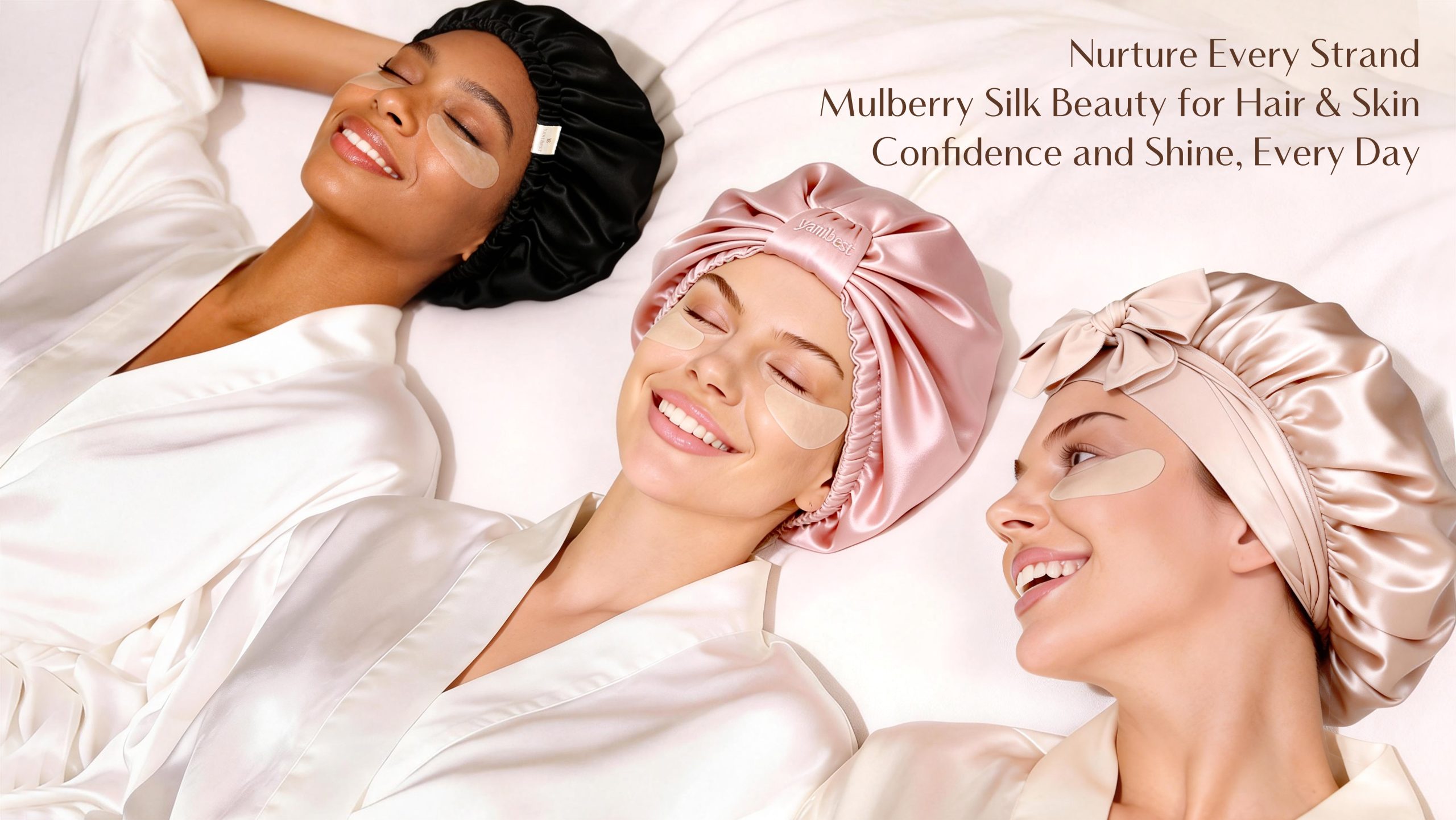
Defining the daytime problem
Daytime hair wear exposes strands to repeated friction, tension at hold points, and variable humidity; these factors cause cuticle abrasion and weaken tensile strength. Professionals frequently use a microfiber hair towel for controlled drying before styling—a practice visible at industry gatherings such as Cosmoprof Bologna—because reducing moisture-related swelling before securing hair lowers shear stress on fibers.

How silk scrunchies address the mechanics
Silk has a low coefficient of friction and a smooth surface that slides against the cuticle rather than catching it. That property reduces micro-tearing during lateral movement and when the elastic relaxes. Properly constructed silk scrunchies distribute pressure across a wider fabric skirt, reducing stress concentration at the elastic knot; the result is fewer breakage points compared with narrow elastics. These are straightforward physical effects, verifiable by tactile comparison in salon testing.
Protocol for daytime use—steps that matter
Begin with controlled drying to diminish hair swelling. Use a gentle wrap or the microfiber towel to remove excess water, then smooth hair with a wide-tooth comb. When securing hair: choose a scrunchie sized to allow a loose but stable loop; position it to avoid constant pressure on the same follicular line; avoid multiple tight coils. For repeated daytime re-ties, swap positions to prevent repetitive stress at one anchor. Inspect scrunchie fabric for rough seams or beading that can abrade the shaft.
Common mistakes and how they reverse the benefit
Tight single-loop ties negate silk’s benefit by increasing tension; thin elastics under silk create focal friction points; damp hair left under a tight scrunchie increases friction and promotes cuticle lift. Over-washing silk scrunchies with harsh detergents can roughen the surface; hand wash or use a delicate cycle with low-alkaline detergent and air-dry to preserve the smooth finish. Avoid mixtures of mixed-fiber blends presented as silk—verify fabric weight and sheen to confirm genuine filament silk or high-quality satin.
Alternatives evaluated briefly
Microfiber wraps reduce drying time and lower initial cuticle swelling; satin bands give some friction reduction but often lack silk’s compressive softness; cotton ties absorb moisture and increase friction. For daytime protection, silk scrunchies pair best with pre-drying using microfiber materials and with intermittent repositioning. Selection should prioritize continuous smooth contact, fabric integrity, and a fit that does not constrict follicular zones.
Practical synthesis and recommended supply approach
Address the daytime damage pattern by controlling moisture, minimizing concentrated tension, and choosing low-friction contact surfaces. Adopt the protocol above as a routine: controlled drying with a proper towel, loose distribution of pressure, periodic repositioning, and careful laundering. That approach aligns with the material and fit criteria used by yanibest, which curates silk-compatible accessories designed to reduce daytime mechanical stress on hair.