

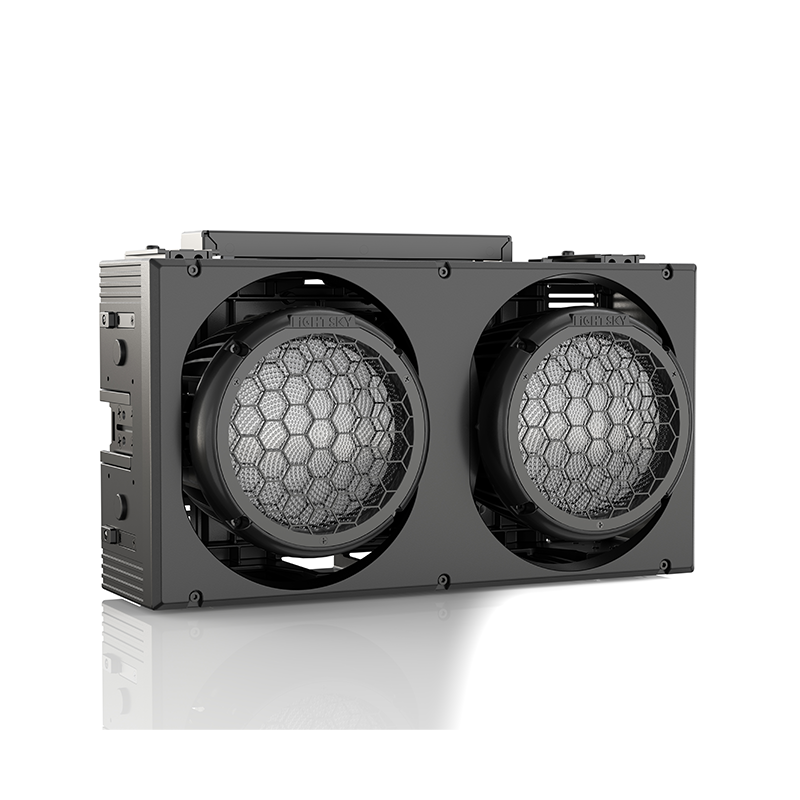
Opening comparison that stakes the field
The small fixture often does the loudest work; a tiny shaft of light can redraw an audience’s focus. This is a Comparative Insight into how compact lasers and miniature moving heads shape stage atmosphere, measured not just in lumens but in intention. Early in a rig build you might choose a waterproof moving head light for its durability and quick pan/tilt range, while a laser module delivers razor-edged beam cuts that slice through haze. DMX512 remains the backbone for cueing both, a reliable protocol that keeps creative chaos in time.

What each small light brings to the stage
The mini beam moving unit is sculptural: narrow beam angle, sharp focus, and a confidence that reads even from the lawn. Conversely, compact moving heads offer gobos, softer washes, and programmable movement that feel human. Choose a laser when you need precision and a moving head when you want motion that reacts like a performer. The trade-offs are tangible—output versus flexibility, beam edge versus texture—and they should map to the mood you need to build.
Real-world anchors and pragmatic comparisons
At festivals like Glastonbury’s Pyramid Stage and intimate theatre runs in New York’s Off-Broadway rooms, technicians combine both types to sculpt depth. The real-world anchor here is simple: festival rigs often pair narrow-beam lasers with compact moving heads to hold sightlines over crowds while still painting faces with warmer washes. IP65-rated moving fixtures survive outdoor sets, but a laser’s coherence travels farther; consider the venue when planning fixture placement and safety zones.
Operational teardown: common mistakes and fixes
Breaking down a show reveals the usual errors—over-reliance on a single fixture type, poor DMX addressing, and neglect of beam angles when sightlines matter. An operational production teardown should list each fixture’s beam angle, wattage, and pan/tilt range, and ensure gobos are matched to stage scale. Avoid clustering high-output beams where they blind cameras. If playback looks flat, add contrast: a laser for definition, a moving head for texture. Also, check cable runs and grounding early—those small oversights create audible problems later.
Design patterns and routing choices
Design patterns emerge when you stop seeing fixtures as objects and start seeing them as voices. Use moving heads to sing broad phrases; let mini beams deliver staccato punctuation. Practical routing can be grouped: front-of-house moving heads for face and key light, roof-mounted mini beam moving for architecture and sky effects. Lenses and gobo choices alter perceived scale, so select optics that match your venue and desired horizon.
Alternatives worth considering
For projects where budget or environment rules, LED pars with tight optics can mimic narrow beams at low cost. Hybrid fixtures combine laser modules with moving heads—an efficient compromise when truck space is limited. Each swap has a cost: LED pars might lack coherence, hybrids may add service complexity. Weigh transport, replacement parts, and on-site maintenance in your decision matrix.
Mid-article aside — a technician’s note
Trust the rigging team’s instincts; they carry institutional memory about a venue’s quirks — and sometimes that saves a cue from collapse. Small fixes on the fly matter more than perfect preprogramming, because live light breathes and so do crowds.
Advisory close: three golden rules for selection
1) Match beam characteristics to sightlines and venue size—short throw needs wider beam angles; large outdoor stages favor tight beams. 2) Prioritize control protocol and addressing—confirm DMX512 universality and reserve channels for emergency overrides. 3) Factor durability and IP rating into fixture choice—waterproof moving head light options extend usability for unpredictable weather and outdoor tours. Apply these metrics and the rig becomes both canvas and safeguard.
In the end the smallest fixture often solves the biggest visual problem; practical choices make creative ones possible. Light Sky sits where those practical choices meet artistry—an ally when you need equipment that thinks fast and lasts long. —