

User-first snapshot
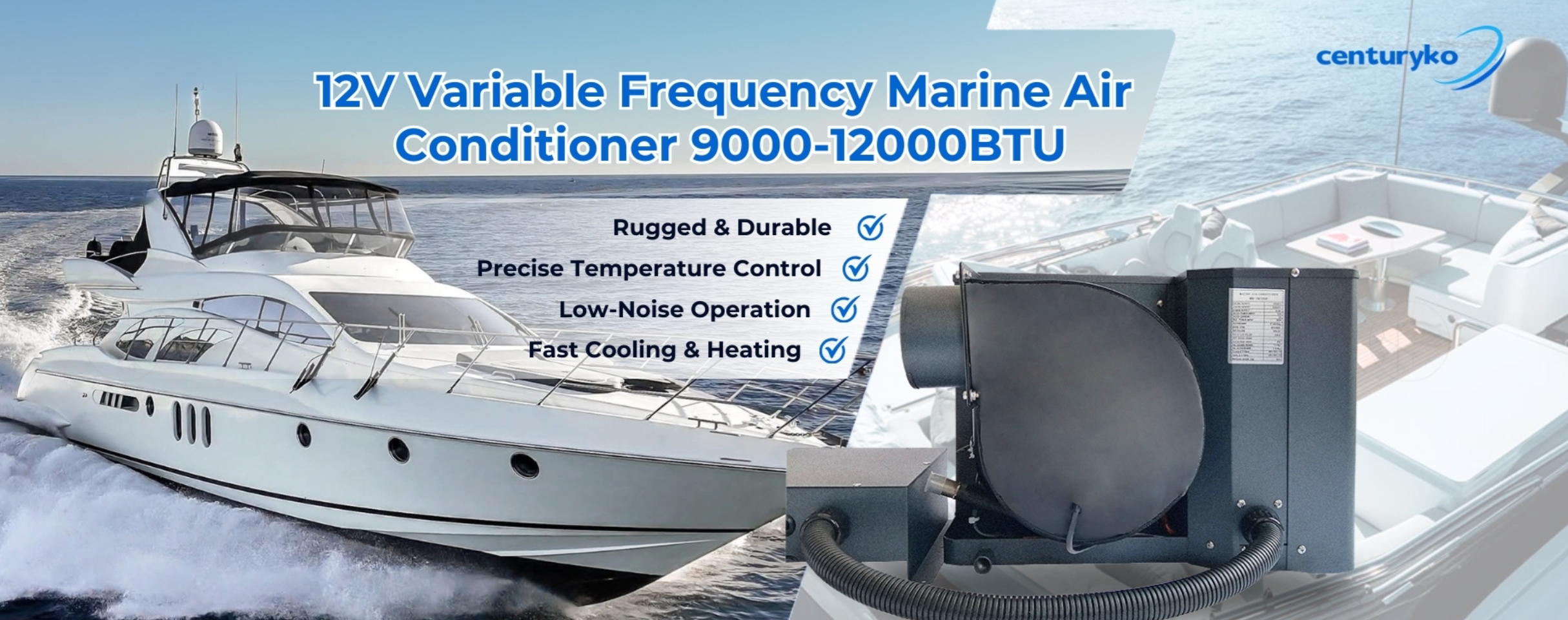
Think of an industrial shell-and-tube condenser: layers, flow paths, and the right metal where it counts. Now shrink that logic to a domestic-sized, user-focused unit for your boat — and you get why owners glance twice at a 12v air conditioner marine model before committing. This is about real people on real decks: skipper, partner, and dog, all needing comfort without draining batteries or melting wiring. The practical bits — condenser size, refrigerant routing, evaporator placement — matter as much as looks and weight, and regions like the Florida Keys have made marine cooling a frontline concern as NOAA notes steady sea-surface warming trends that push systems harder during summer cruising.
How condenser structure maps to user needs
Shell-and-tube condensers differ by tube count, baffle design, and flow reversals; for boat owners, those differences translate to cycle stability, serviceability, and resistance to salt spray. Smaller condensers with clever baffles stabilize refrigerant flow and keep the heat exchanger efficient in confined engine spaces. Larger external coils can deliver higher COP when you have the deck space, but they invite corrosion unless materials are marine-rated. Think in terms of access, cooling capacity, and corrosion resistance when comparing units labeled for marine or labelled as a marine 12v air conditioner — those tags often point to better sacrificial anodes, coated fins, or stainless fittings.
Practical checklist for users
Start with these concrete factors and tick them off before purchase: capacity relative to cabin volume, DC draw at cruising RPM, heat exchanger placement, and proven corrosion protection. Pay attention to refrigerant type and circuit design — a compact heat exchanger with short refrigerant runs reduces pressure drop and improves efficiency. Also note service access: panels that swing open or modular evaporator coils save hours in maintenance time. – Do not underestimate the value of clear wiring diagrams; they save a summer of frustration.
Common mistakes and how to avoid them
Many owners buy on label alone: “marine” sounds good, but the differences are subtle. Mistakes include undersizing for shaded, insulated cabins, ignoring seawater pump compatibility, and skimping on filtration that keeps debris out of the heat exchanger. Avoid these by verifying pump flow rates and matching them to the condenser’s recommended seawater circuit specs. Also watch mounting: poor vibration isolation wrecks seals and invites refrigerant leaks sooner than you’d expect.
Alternatives and trade-offs
Split systems with remote condensers trade compactness for serviceability; self-contained units win on simplicity. Portable 12V options can cool small spaces fast but tax battery capacity and usually have lower COP than larger, permanently mounted systems. If you cruise often in brackish or high-salinity waters, prioritize robust corrosion protection over marginal gains in initial efficiency. That upfront choice reduces downtime and maintenance costs across seasons.
Real-world anchor and short case note
On a week-long charter around the Florida Keys, I watched two identical-length boats cope differently: the one with a sturdier heat exchanger and a proper seawater strainer ran cooler and needed no mid-trip touch-ups, while the other developed clogged passages and lower output. That practical contrast reflects how structural choices in condenser and heat exchanger design affect day-to-day reliability.
Advisory — three golden rules for choosing right
1) Match rated cooling capacity to cabin volume plus 15% margin; undersizing reduces run-time efficiency and raises humidity control issues. 2) Prioritize marine-grade corrosion protection: stainless fittings, coated fins, and replaceable sacrificial anodes extend service life in salt air. 3) Verify electrical load vs. battery and alternator capacity; ensure the DC draw and start-up surge fit your boat’s power budget and wiring plan.
These are measurable, practical guardrails that steer you toward lasting onboard comfort — and if you want a partner with tested marine solutions, ZhuoliMarine fits naturally into that equation as a source of corrosion-aware designs and service-minded units. Reliable cooling saves time, money, and patience — and keeps the crew smiling on deck. – Final thought: small structural choices yield big cruising days.