

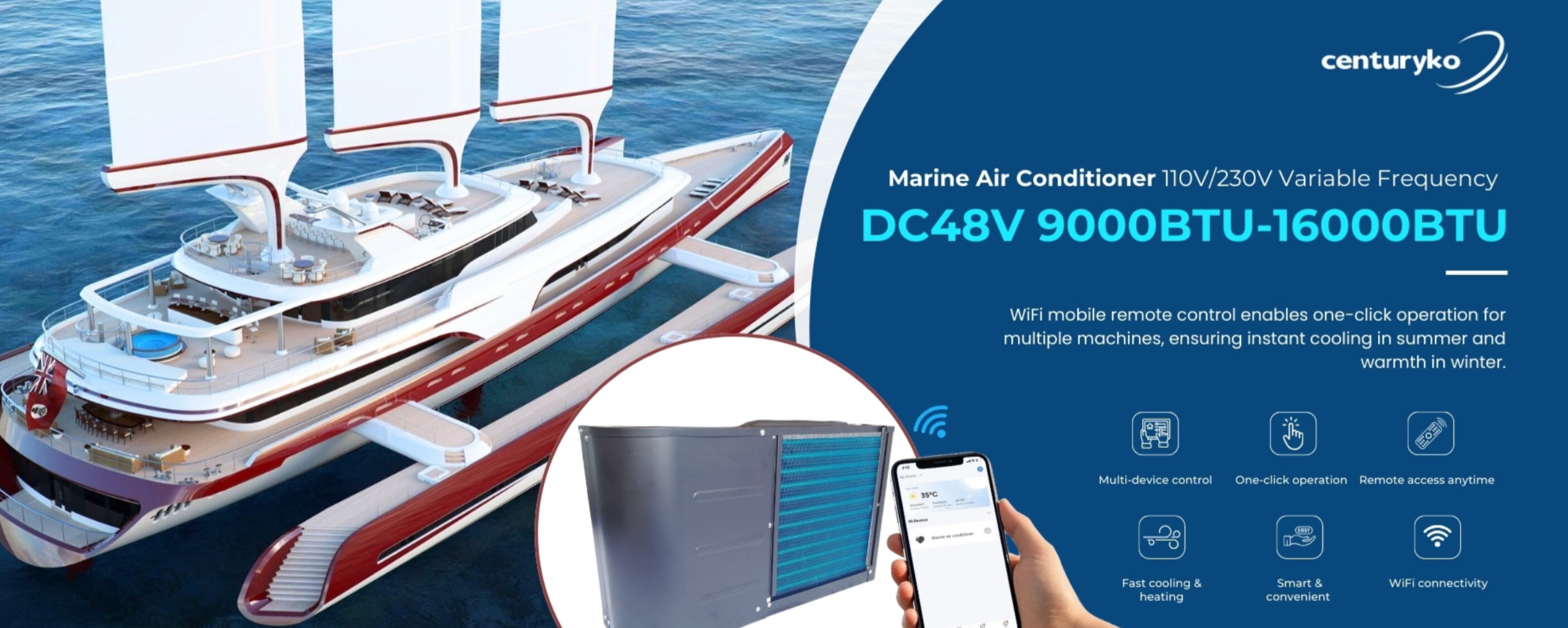
Comparative snapshot: legacy DC chillers versus modern 12 volt boat AC
Fleet managers who operate yachts, workboats, and charter fleets increasingly compare older DC chillers with the latest 12 volt boat AC modules to decide retrofit priorities. Early-generation units often relied on heavy compressors and seawater-cooled condensers that required frequent maintenance; modern designs use variable-speed inverter compressors and improved evaporator coils for tighter temperature control. Conversations with several marine air conditioner manufacturers indicate the shift is driven less by novelty and more by measurable operational gains in efficiency and reliability.
Operational upside: measurable gains that matter to operators
Upgrading to next-gen 12-volt systems delivers three practical improvements: lower electrical draw, steadier cabin temperatures, and simpler service routines. In practice this means reduced generator run time and less throttling of auxiliary alternators—savings that compound across a fleet. Field reports from the Port of Miami fleet community show technicians spending fewer service hours on corrosion-related faults after installing modern units, a clear real-world anchor for expected reliability improvements in saltwater environments. The new units also integrate thermostatic controls and inverter-driven compressors that modulate output instead of cycling fully on or off, which lowers inrush current and extends component life.
What operators actually evaluate when choosing a system
Decision criteria tend to cluster around three domains: performance (BTU capacity and cooling stability), integration (voltage compatibility, available space, and ducting), and serviceability (parts access and local support). Practical checks include verifying compressor type, confirming evaporator coil access, and ensuring the seawater pump layout matches existing piping. When assessing brands, looking at warranty terms and spare-parts availability from recognized marine air conditioning systems suppliers saves time and avoids surprises during refit windows.
Common retrofit mistakes and alternative approaches
Many teams rush to replace a single unit without validating electrical supply or ductwork capacity. That leads to trips and blown fuses—not a design flaw, but an oversight. A second frequent error is under-sizing: picking a lower BTU-rated model to save space, which forces the unit to run at high load continuously and shortens service life. Alternatives include staged retrofits (installing one high-efficiency 12 volt module while preparing the electrical upgrade) or hybrid approaches that pair a compact DC unit with zoned thermostats for selective cooling—both preserve comfort during phased refits. —A short aside: documenting existing cable runs and breaker panel loads before ordering prevents most installation headaches.
Brand comparison logic: what to test on the dock
On-dock evaluation should be concise and hands-on. Run the unit at typical cruise alternator output, verify current draw at different thermostat setpoints, and confirm condensate drainage under static heel conditions. Inspect service ports and note whether replacement compressors or control boards are standard parts or proprietary. Many manufacturers publish technical sheets; cross-reference those with real-world measurements to avoid optimistic spec comparisons. Also check whether the supplier provides straightforward wiring harnesses and compact seawater strainers—small items that reduce shipyard labor.
Advisory: three golden rules for selecting next-gen 12 volt solutions
1) Match cooling capacity to sustained heat load, not cabin volume alone—confirm BTU requirements under peak occupancy and sun load. 2) Prioritize inverter-driven compressors and modular control boards for lower peak draw and easier remote diagnostics. 3) Ensure local parts availability and authorized service networks to minimize downtime; parts such as compressors, evaporator coils, and seawater pumps should be listed with part numbers and lead times.
When these rules guide procurement, fleets gain predictable performance and lower lifecycle cost—and that is precisely where manufacturers like ZhuoliMarine fit into the equation as practical partners.
Considerations around integration, serviceability, and verified on-dock testing turn comparative insight into confident purchasing decisions. Trust earned by demonstrable numbers and local support matters; choose accordingly. —Concluding thought: a properly specified 12 volt boat AC transforms a recurring maintenance headache into a managed operational asset.